
FlamingFoodies recipe
Spicy Miso Ramen with Togarashi Oil
Rich, warming ramen with fermented chili-miso broth and aromatic togarashi oil that builds gentle heat with each spoonful.
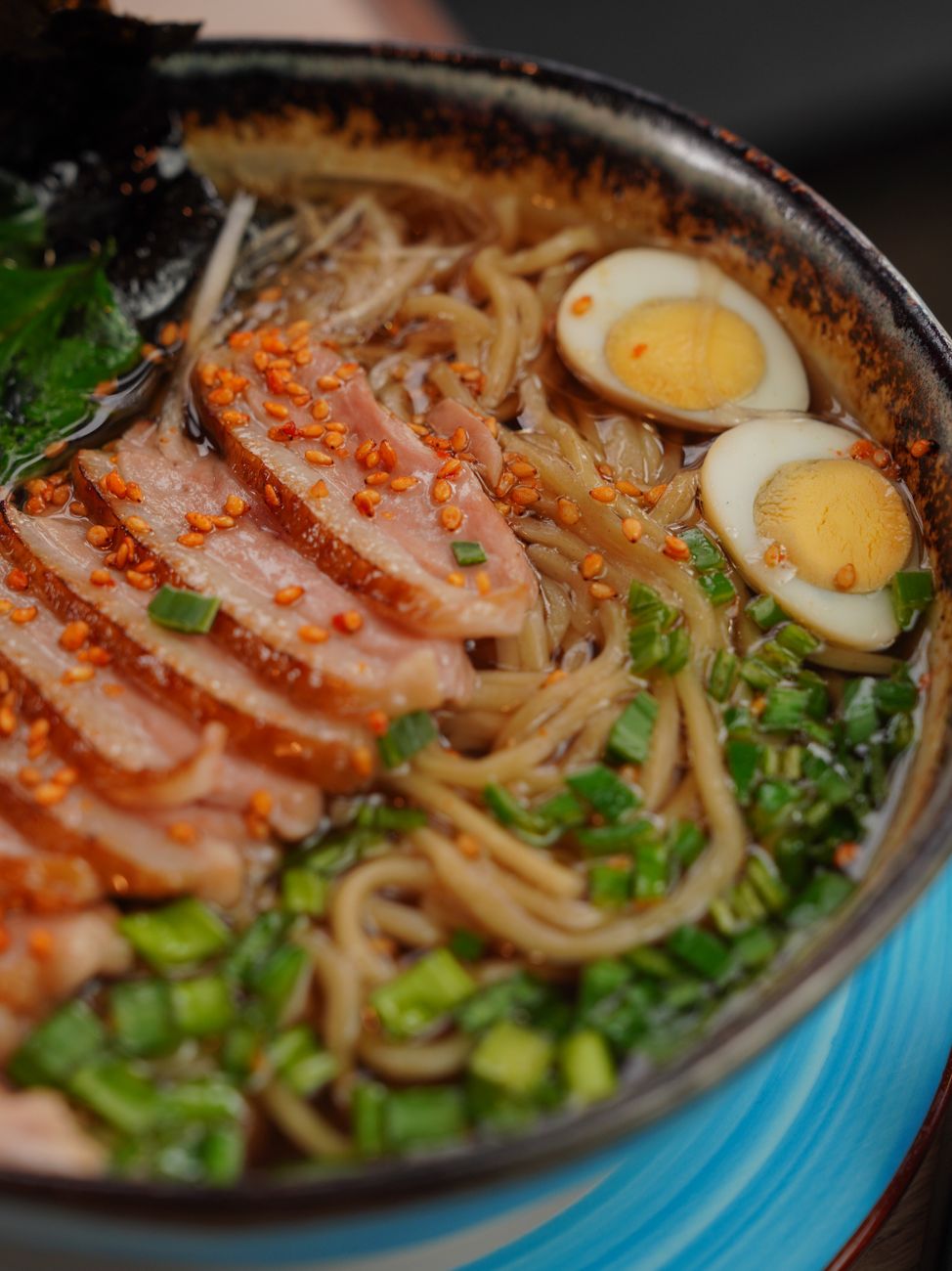
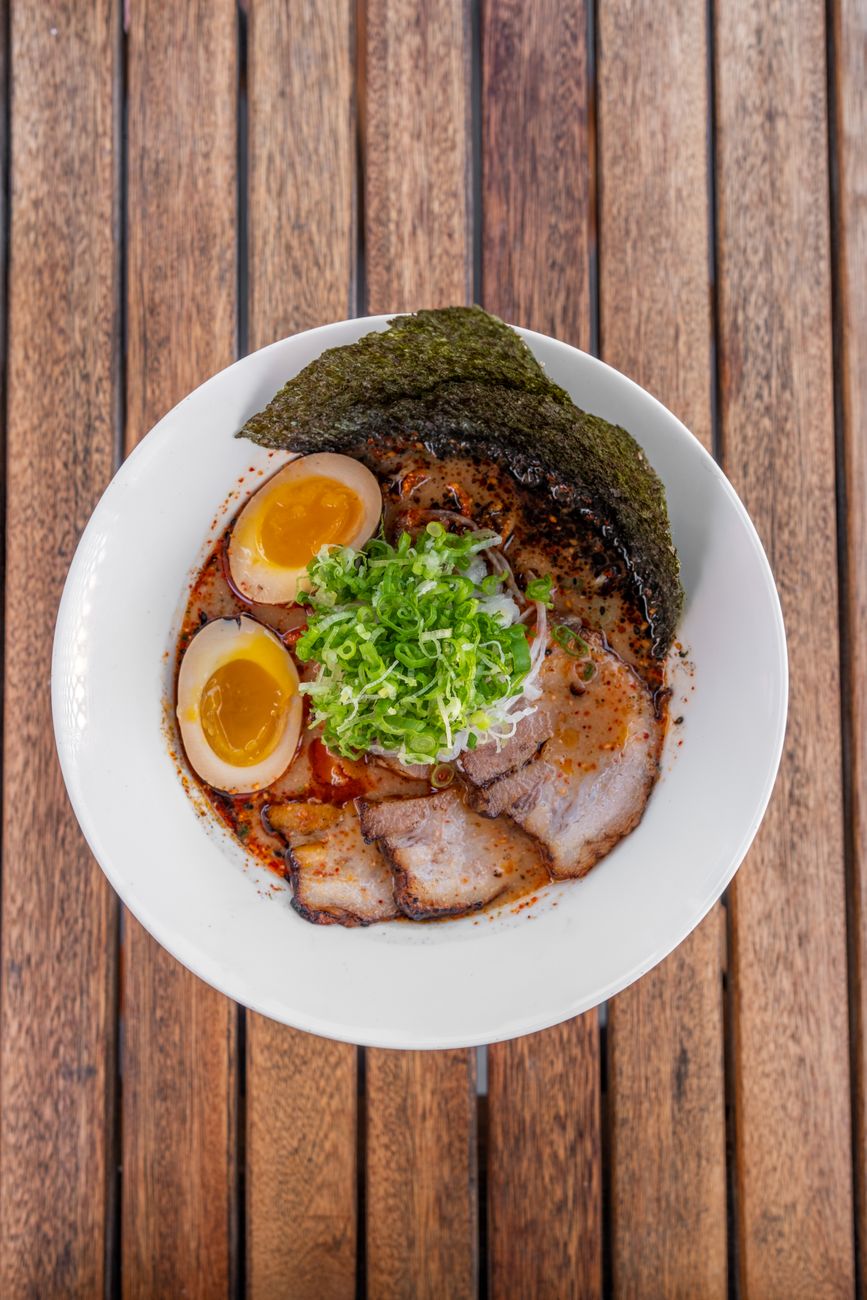
A soul-warming bowl where miso's earthy depth meets the gentle warmth of bloomed togarashi spices. Each spoonful delivers layers of heat that unfold gradually, crowned with tender pork, jammy eggs, and bright scallions.
Ingredients
Togarashi Oil
- 1/4 cupneutral oil, vegetable or canola
- 2 tablespoonsshichimi togarashi
- 1 teaspoonsesame oil
Broth
- 6 cupschicken stock, preferably homemade
- 3 tablespoonsred miso paste, aka miso
- 2 tablespoonswhite miso paste, shiro miso
- 2 clovesgarlic, minced
- 1 inchfresh ginger, grated
- 1 tablespoonsoy sauce
- 1 teaspoonsesame oil
Assembly
- 4 portionsfresh ramen noodles
- 4 largeeggs, for soft-boiled
- 4 scallionsscallions, sliced thin
- 1 sheetnori, cut into rectangles
- 8 sliceschashu pork, or leftover braised pork belly
Method
1. Make the Togarashi Oil Heat neutral oil in a small saucepan over medium-low heat until it shimmers. Remove from heat and immediately stir in shichimi togarashi, watching as it sizzles and blooms. The mixture should bubble gently without violent spattering. Stir in sesame oil and set aside to steep.
Watch for: The oil should smell fragrant and warm-spicy, not harsh or burnt
Tip: The oil should smell warm and inviting, not harsh—if it gets too hot, the spices turn bitter instead of aromatic.
2. Prepare Soft-Boiled Eggs Bring water to boil in a medium saucepan. Lower eggs carefully into water and cook exactly 6½ minutes for jammy yolks. Transfer immediately to ice water to stop cooking. Once cool, peel and halve lengthwise just before serving.
Watch for: Yolks should be set but still glossy and slightly runny in the center
Tip: Room temperature eggs won't crack as easily when they hit the boiling water.
3. Build the Miso Broth Heat chicken stock in a large pot over medium heat. Whisk both miso pastes with 1 cup of the hot stock in a bowl until smooth, then return mixture to pot. Add garlic, ginger, soy sauce, and sesame oil. Simmer gently for 15 minutes to marry flavors. Taste and adjust seasoning—the broth should be rich and slightly salty with warmth building in the background.
Watch for: The broth should coat a spoon lightly and smell deeply savory with hints of fermentation
Tip: Mixing the miso separately keeps your broth silky smooth—nobody wants lumpy ramen.
4. Cook Noodles and Assemble Bowls Cook ramen noodles according to package directions until just tender. Drain quickly and divide among four bowls. Ladle hot broth over noodles, then drizzle each bowl with togarashi oil. Top with halved eggs, chashu slices, scallions, and nori rectangles. Serve immediately while steam rises from each bowl.
Watch for: Noodles should have slight bite and the assembled bowls should be steaming hot
Tip: A quick rinse of your bowls with hot water keeps the ramen from cooling too fast.
Equipment
- large pot for broth
- small saucepan for oil
- medium saucepan for eggs
- whisk
- ladle
Make ahead
- The broth keeps beautifully in the fridge for 2 days and actually tastes even better the next day. Your togarashi oil will stay fresh at room temperature for a week, and those soft-boiled eggs can hang out in their shells for 3 days.
Storage
- Leftover broth stays good in the fridge for 3 days or in the freezer for up to 3 months. Keep that precious togarashi oil in a sealed container at room temperature.
Reheat
- Warm your broth gently on the stovetop—add a splash more stock if it's gotten too thick. Always cook fresh noodles rather than trying to reheat them; they turn to mush.
Top tips
- That togarashi oil actually gets better over time—make it up to a week ahead and let those flavors deepen
- Double your broth recipe and stash half in the freezer for those nights when only ramen will do
- Keep cooked eggs in their shells in the fridge for up to 3 days—perfect for quick weeknight bowls
Substitutions
- Swap in vegetable stock and skip the pork for a satisfying vegetarian version that's just as soul-warming
- Regular chili oil works if you can't track down togarashi, though you'll miss some of the aromatic complexity
- Fresh udon noodles are wonderful here too—they're a bit chewier but soak up the broth just as well
Serve with
- Start the meal with some crispy gyoza or fluffy steamed buns
- Set out extra togarashi oil for the heat seekers at your table
- Cold Japanese beer cuts through the richness beautifully, or go traditional with hot green tea
Find another recipe
Open archive →Spicy Miso Ramen with Togarashi Oil

Rich, warming ramen with fermented chili-miso broth and aromatic togarashi oil that builds gentle heat with each spoonful.
Prep
25 min
Cook
45 min
Active
35 min
Total
1 hr 10 min
Yield
4 servings
Share this
Pass it around
Send this page to a friend, copy the link, or save it to a Pinterest board.
Save for later
Pin this page
Save the image with a link back to this recipe, review, or article.
Recipe notes
Before you cook
Miso broth and homemade togarashi oil season this bowl of ramen. The oil is prepared separately, then added to the soup.
Total time
1 hr 10 min
Prep: 25 min. Cook: 45 min.
Yield
4 servings
The ingredient quantities below are for this yield.
Method
How to cook it
Use the step navigator to move around, or stay in cook mode and work top to bottom.
- 1
Step 1 of 4
Make the Togarashi Oil
Heat neutral oil in a small saucepan over medium-low heat until it shimmers. Remove from heat and immediately stir in shichimi togarashi, watching as it sizzles and blooms. The mixture should bubble gently without violent spattering. Stir in sesame oil and set aside to steep.
- 2
Step 2 of 4
Prepare Soft-Boiled Eggs
Bring water to boil in a medium saucepan. Lower eggs carefully into water and cook exactly 6½ minutes for jammy yolks. Transfer immediately to ice water to stop cooking. Once cool, peel and halve lengthwise just before serving.
- 3
Step 3 of 4
Build the Miso Broth
Heat chicken stock in a large pot over medium heat. Whisk both miso pastes with 1 cup of the hot stock in a bowl until smooth, then return mixture to pot. Add garlic, ginger, soy sauce, and sesame oil. Simmer gently for 15 minutes to marry flavors. Taste and adjust seasoning—the broth should be rich and slightly salty with warmth building in the background.
- 4
Step 4 of 4
Cook Noodles and Assemble Bowls
Cook ramen noodles according to package directions until just tender. Drain quickly and divide among four bowls. Ladle hot broth over noodles, then drizzle each bowl with togarashi oil. Top with halved eggs, chashu slices, scallions, and nori rectangles. Serve immediately while steam rises from each bowl.
Troubleshooting
Tips that matter
- That togarashi oil actually gets better over time—make it up to a week ahead and let those flavors deepen
- Double your broth recipe and stash half in the freezer for those nights when only ramen will do
- Keep cooked eggs in their shells in the fridge for up to 3 days—perfect for quick weeknight bowls
Substitutions and variations
Storage and leftovers
Plan ahead and reheat well
Make ahead
The broth keeps beautifully in the fridge for 2 days and actually tastes even better the next day. Your togarashi oil will stay fresh at room temperature for a week, and those soft-boiled eggs can hang out in their shells for 3 days.
Storage
Leftover broth stays good in the fridge for 3 days or in the freezer for up to 3 months. Keep that precious togarashi oil in a sealed container at room temperature.
Reheat
Warm your broth gently on the stovetop—add a splash more stock if it's gotten too thick. Always cook fresh noodles rather than trying to reheat them; they turn to mush.
At the table
Serving suggestions
- Start the meal with some crispy gyoza or fluffy steamed buns
- Set out extra togarashi oil for the heat seekers at your table
- Cold Japanese beer cuts through the richness beautifully, or go traditional with hot green tea
FAQ
Common questions
Can I make this without the togarashi oil?
You could, but you'd be missing the heart of what makes this ramen special. If you can't make the oil, try stirring a bit of good chili oil into each bowl—it won't be quite the same, but it'll still be delicious.
What if I can only find one type of miso?
Red miso on its own works just fine—use 4 tablespoons total. Your broth will be a bit more intense and salty, but that's not a bad thing at all.
How spicy is this really?
It's the friendly kind of spicy—warm and aromatic rather than punishing. The heat builds gently as you eat, making it perfect for people who want to ease into spicier foods without suffering.
Heat profile
Medium heat
The recipe is classified as medium. Use less chile if you prefer milder food.
Skill level
Intermediate
Check the method for steps that need to be prepared at the same time.
Total time
1 hr 10 min
Prep: 25 min. Cook: 45 min.
Yield
4 servings
The ingredient quantities below are for this yield.
Cook this with
Three useful buys before you start
A sauce, a pantry ingredient, and a kitchen tool to consider for this dish.
Sauce
Los Calientes Rojo
Heatonist · Best for tacos
It brings enough heat to cut through the richer bites without flattening the rest of the dish.
Get the sauce used herePantry
Crunchy Chili Crisp
Texture hit
Finishing bowls and dumplings. Crunch, oil, and lingering heat for dumplings, eggs, noodles, and roasted vegetables.
Grab the pantry stapleGear
Compact Rice Cooker
Meal-prep anchor
Bowls, fried rice, and weekly meal prep. A simple countertop win for rice bowls, congee, spicy fried rice, and the carb base that makes leftovers useful.
Use this toolPair this with
The right bottle for this recipe
These sauce picks are matched to the dish itself, not dropped in at random. Use them to finish, sharpen, or push the heat where it helps.
Los Calientes Rojo
It brings enough heat to cut through the richer bites without flattening the rest of the dish.
Heatonist Los Calientes Rojo: flavor notes, heat level, and suggested food pairings.
Yellowbird Habanero
It brings enough heat to cut through the richer bites without flattening the rest of the dish.
A bright, carrot-forward bottle with enough heat to stay lively and enough sweetness to stay versatile.
Shop the pantry
Pantry staples for this recipe
Texture hit
$10-$16Crunchy Chili Crisp
Finishing bowls and dumplings. Crunch, oil, and lingering heat for dumplings, eggs, noodles, and roasted vegetables.
Check price on AmazonRoast-anything helper
$8-$15Harissa Paste
Roasts, braises, and yogurt sauces. The smoky-chili shortcut for roast carrots, meatballs, chicken thighs, and yogurt sauces that need a little menace.
Check price on AmazonCreamy upgrade
$6-$12Kewpie Mayonnaise
Spicy mayo, sandwiches, and bowl sauces. The easy way to make spicy mayo, egg sandwiches, yakisoba drizzles, and quick sauces taste richer and more intentional.
Check price on AmazonRecommended equipment
Cooking tools
Meal-prep anchor
$30-$60Compact Rice Cooker
Bowls, fried rice, and weekly meal prep. A simple countertop win for rice bowls, congee, spicy fried rice, and the carb base that makes leftovers useful.
Check price on AmazonDIY hot sauce
$20-$35Fermentation Jar Kit
Homemade sauce projects. A clean starter kit for building fermented hot sauces and pepper mash at home.
Check price on AmazonCook next
More recipes with similar heat
These are the next recipes most likely to fit the same mood, pantry, or heat level once this one is in your rotation.

japanese · medium
Jun 7, 2026Spicy Karaage Chicken Rice Bowl with Togarashi Mayo
Crispy Japanese fried chicken glazed with sweet-spicy sauce over seasoned rice, topped with crunchy vegetables and creamy togarashi mayo. 40 min · 0 saves.

japanese · hot
Jun 9, 2026Mapo Nasu with Scotch Bonnet Heat
Silky Japanese eggplant swimming in a miso sauce that means business—scotch bonnet chiles bring fruity heat that builds beautifully with each bite. 45 min · 0 saves.
szechuan · medium
May 27, 2026Dan Dan Noodles with Sichuan Peppercorns
Silky wheat noodles bathed in a rich sesame sauce with the signature tingle of Sichuan peppercorns, topped with savory ground pork and a drizzle of aromatic chili oil. 35 min · 0 saves.
FlamingFoodies picks
Pantry, gear, and bottle picks that fit this meal
Smoky shortcut
Chipotle Peppers in Adobo
The pantry move for smoky mayo, burger sauce, taco braises, and chili that tastes like you actually thought ahead. Best for burger sauce, chili, and taco fillings.
View on AmazonNumbing heat
Fly By Jing Sichuan Gold
A more citrusy, peppercorn-leaning sauce when you want flavor movement instead of pure capsaicin. Best for dumplings, noodles, and fried eggs.
View on AmazonFrom the blog
More about this dish
Read more about the ingredients and cuisine.

science
May 31, 2026Miso, Sesame, and Fermented Chili Pastes in Japanese-Inspired Dishes
Miso, sesame, dashi, and fermented chili pastes provide a savory base for Japanese-inspired noodle bowls and other spicy dishes.
culture
May 21, 2026Japan's Heat Wave: Five Spicy Dishes That Have Us Completely Hooked
Japanese spicy dishes are having their moment—and it's about time. From tantanmen's creamy sesame fire to curry udon so intense it should come with a warning, these five dishes represent something deeper than a trend.
Background guides
Read the guide behind the technique
Learn more about the cooking techniques used here.
Community notes
Reader discussion is shared across recipes, reviews, and editorial pieces.
Comments are read-only while member sign-in is paused.