
science
Why Middle Eastern Spicy Dishes Are Built on Layered Heat, Not Just Fire
Middle Eastern spicy food layers chile peppers with warm spices and acid to build depth instead of just heat. Learn how dishes like harissa and muhammara work, and how to adjust the burn to your taste.
Share this
Pass it around
Send this page to a friend, copy the link, or save it to a Pinterest board.

Save for later
Pin this page
Save the image with a link back to this recipe, review, or article.
Middle Eastern cooking treats heat as a flavor, not a challenge. Rather than relying on a single fiery pepper, the region's most compelling spicy dishes combine dried chiles with warm spices—cumin, coriander, cinnamon—and balance everything with acid. The result is food that tastes complete, not just hot.
This layering explains why muhammara and harissa-based stews work so well: the heat doesn't stand alone. It mingles with other flavors, arriving in waves rather than all at once. You taste the chile first, then the warm spices unfold underneath, then comes the lingering burn. That structure is what makes you reach for another spoonful.
How Peppers and Warm Spices Work Together
Most Middle Eastern spicy dishes start with dried red chiles—Aleppo peppers, bird's eyes, or locally grown varieties—layered with spices that have their own subtle warmth. Cumin adds earthiness. Coriander brings a faint citrus note. Cinnamon introduces sweetness that rounds out the edges of the heat without reading as dessert-like.
When these cook together in a paste like harissa or simmered into a sauce, the peppers' heat doesn't dominate. It mingles with the spices, creating a flavor that feels deliberate rather than aggressive. A spoonful of harissa on bread demonstrates this clearly: you taste the chile first, then the warm spices unfold, then comes the lingering heat.
Aleppo peppers sit at a moderate heat level (around 10,000–15,000 Scoville units) with a fruity, slightly smoky undertone. They're popular because they contribute flavor as well as burn. Bird's eye chiles bring more intensity (50,000–100,000 units) but work well with heavier spices that can balance their sharpness. If you want to adjust the heat in a dish, swapping between these two—or using a blend—gives you control without dismantling the flavor structure.
Acid Changes How Heat Registers
Lemon juice, lime, and vinegar aren't just toppings in Middle Eastern cooking; they're part of how spice works. Acid sharpens the perception of heat while brightening everything else on the plate. A squeeze of fresh lemon over muhammara or shakshuka with harissa doesn't cool the burn, but it makes the dish feel lighter and more inviting, which paradoxically makes you want to eat more of it.
This matters practically in the kitchen: if a dish feels one-dimensional or too intense, acid often fixes it faster than adding more ingredients. A tablespoon of pomegranate molasses or red wine vinegar can transform a heavy stew into something that tastes fresh and intentional.
Where This Approach Appears
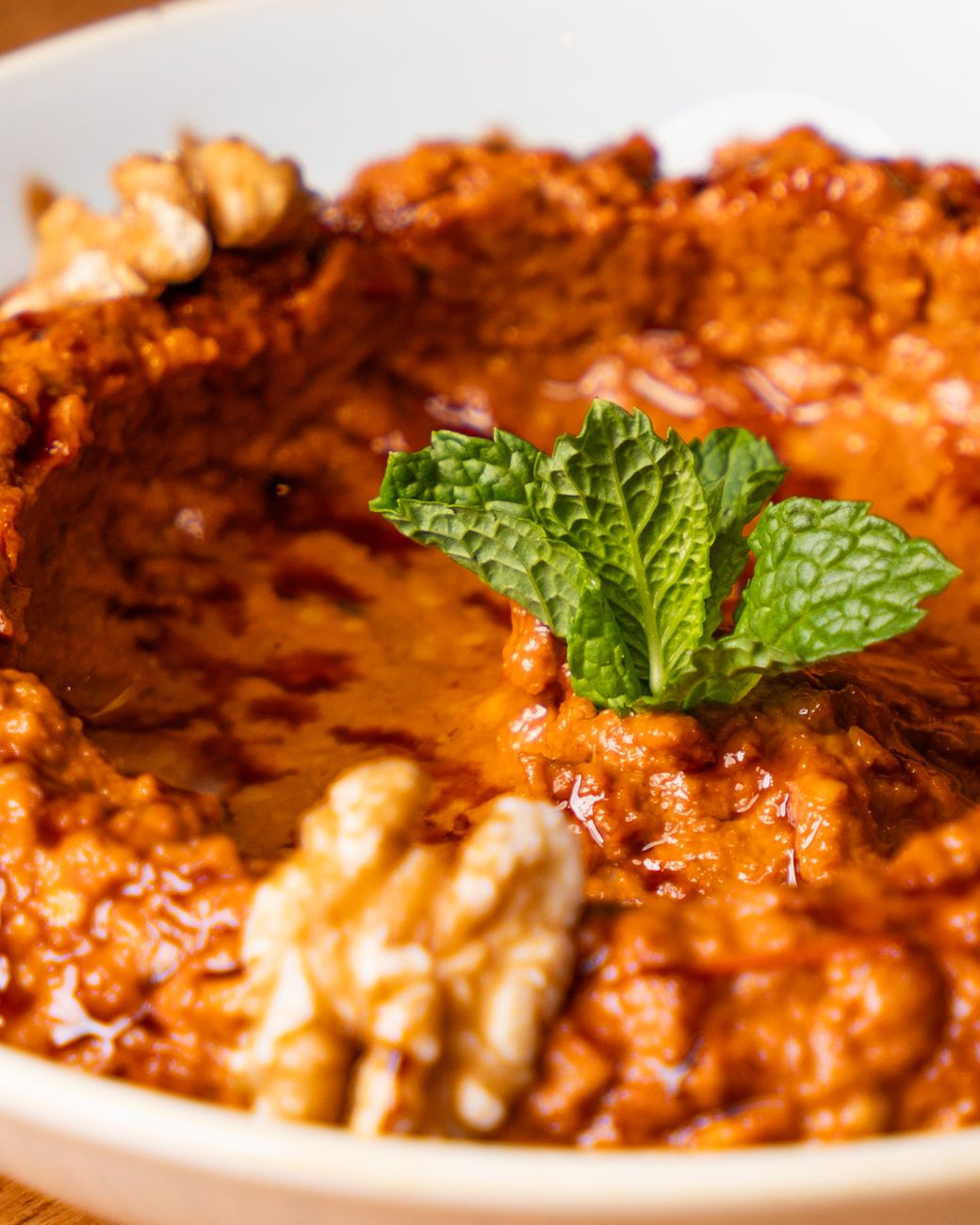
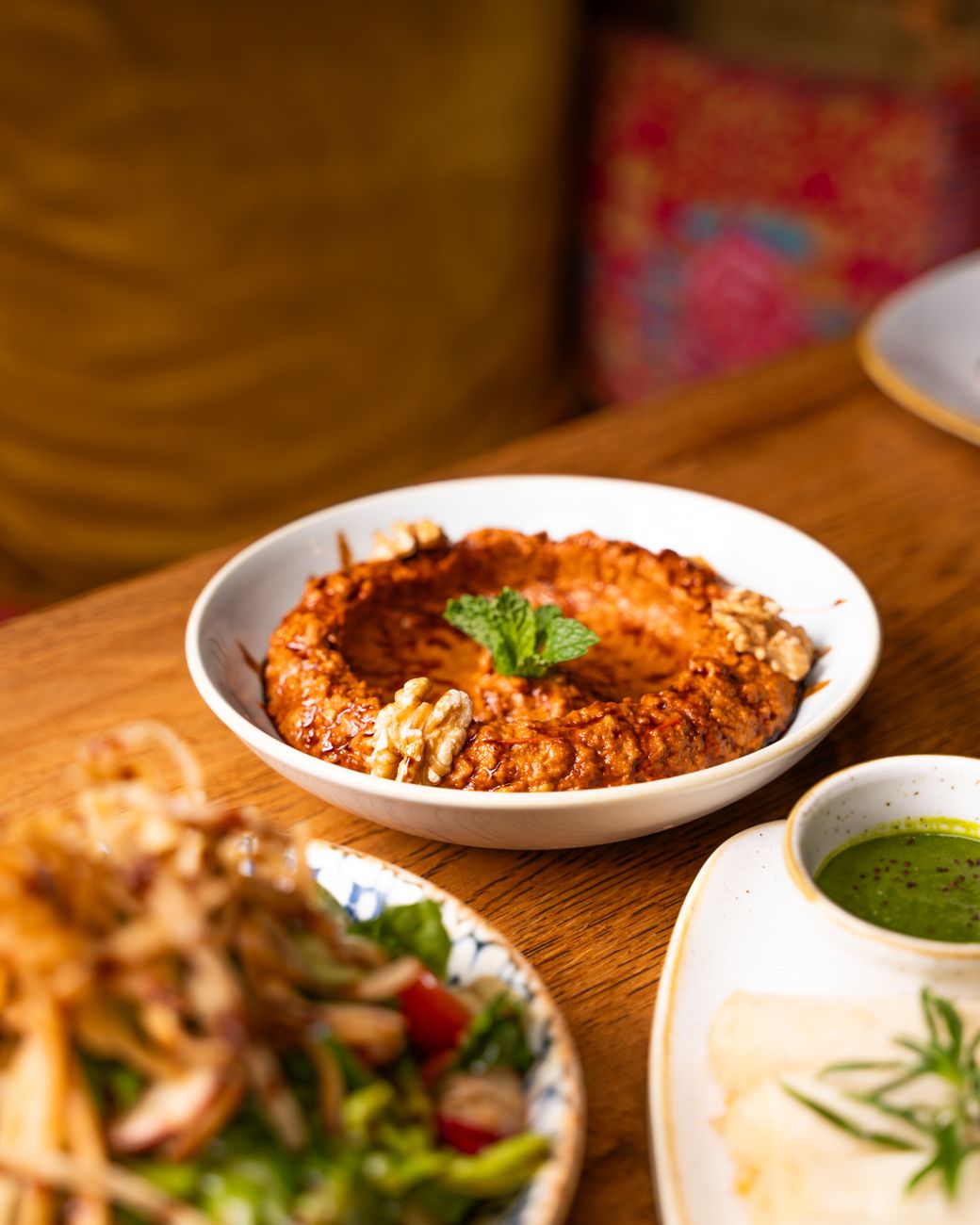
Muhammara—roasted red peppers, walnuts, breadcrumbs, and pomegranate molasses with a hit of Aleppo pepper—is craveable because no single element overwhelms. The peppers provide heat and depth, but walnuts add richness and pomegranate molasses adds tang. You reach for another spoonful because your mouth isn't just burning; it's engaged.
Harissa-based dishes—whether a spiced chicken stew, shakshuka, or a marinade for lamb—follow the same logic. The harissa provides heat and savory depth, but rice, bread, or eggs soak it up and give your palate something to land on. The heat builds gradually rather than arriving all at once.
Zhug, a green sauce from the Levant made with herbs, garlic, and green chiles, uses a different pepper—usually green, fresher, with less concentrated heat—but follows the same principle: acid in the form of lemon juice, plenty of competing flavors, and a heat level that makes you curious rather than cautious.
Building This at Home
If you're drawn to these dishes but want to control the spice level, start by understanding what's in them. Most rely on dried peppers you can measure precisely, not fresh ones where heat varies widely. A teaspoon of harissa mixed into yogurt or oil behaves differently from a teaspoon stirred into hot food, which behaves differently from a teaspoon dissolved in cold liquid.
Warm spices should be tasted before they go into the dish. Old or poorly stored cumin and coriander turn musty instead of warm and helpful. Fresh spices support the peppers; stale ones muddy the heat.
Add acid last or at the table, where you control how much. This gives you—and anyone eating with you—the option to brighten the heat or leave it as is.
Middle Eastern spicy food doesn't ask you to prove anything by eating it. It's designed to be complex and approachable at the same time.
Peppers featured in this post
Cook with this idea
Recipes to try next.
Put these ingredients and techniques to use in your next meal.
middle_eastern · inferno
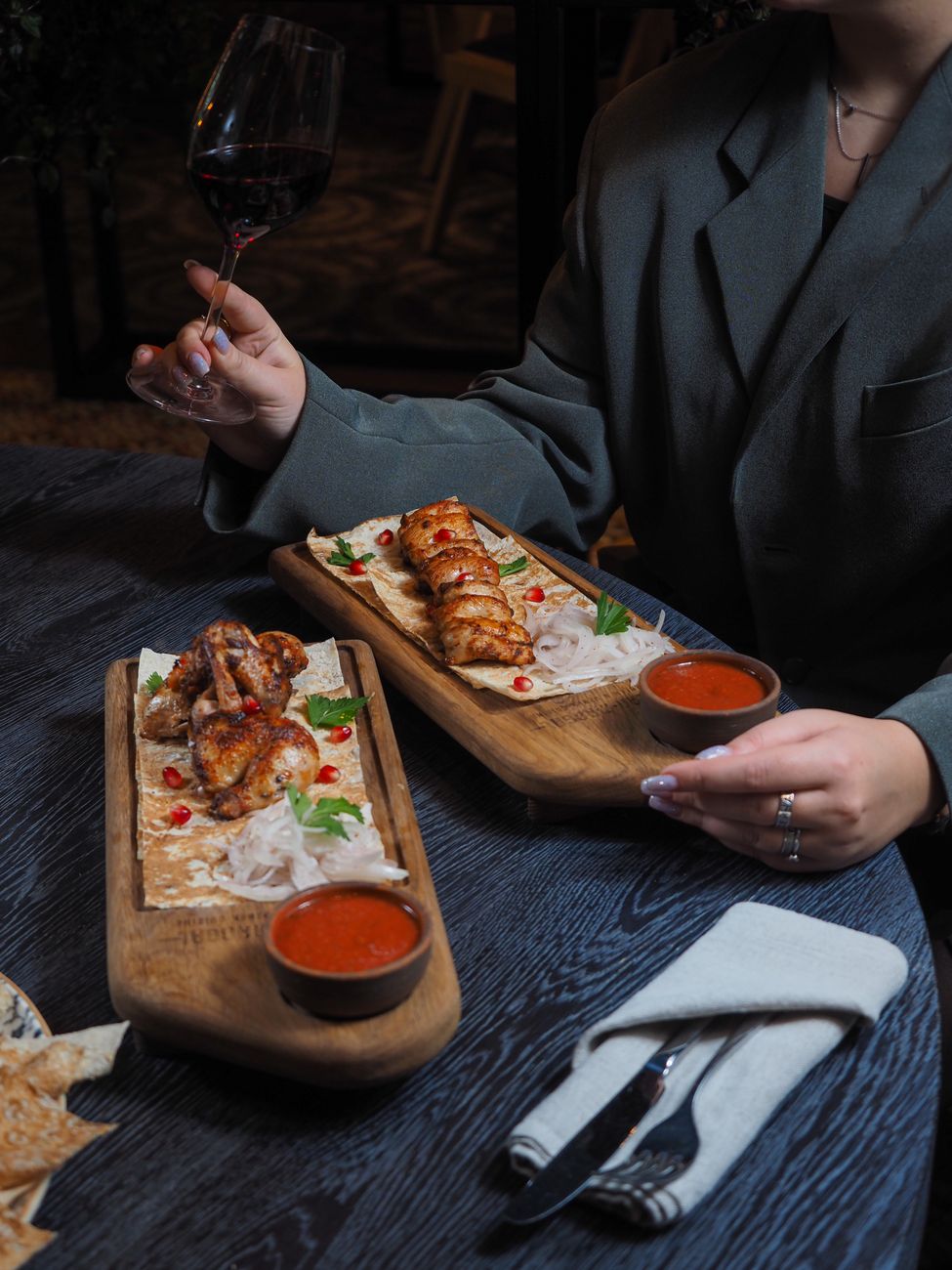
Jun 15, 2026Scorpion Harissa Wings with Pomegranate Glaze
Middle Eastern-spiced chicken wings with an extreme heat harissa marinade featuring Trinidad Scorpion peppers and a tangy pomegranate molasses glaze. 70 min · 0 saves.
middle_eastern · inferno
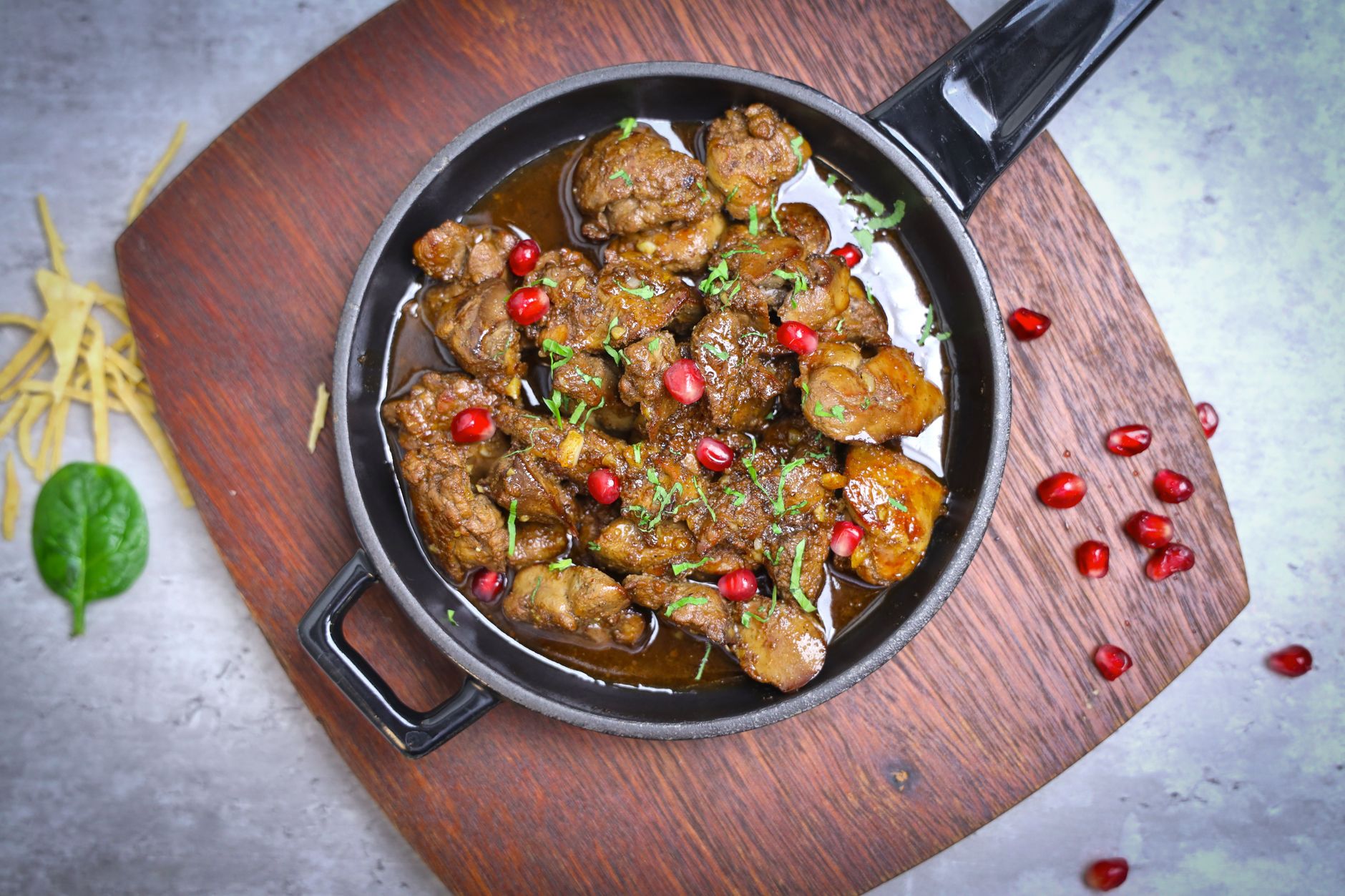
Jun 6, 2026Scorpion Pepper Fesenjan (Persian Pomegranate Walnut Stew)
A treasured Persian fesenjan recipe that pushes the boundaries with Trinidad Scorpion peppers. This rich, glossy stew weaves together ground walnuts and tart pomegranate molasses with chicken that falls apart at the touch of a fork—all while delivering heat that will test even the most dedicated spice lovers. 115 min · 0 saves.
middle_eastern · inferno
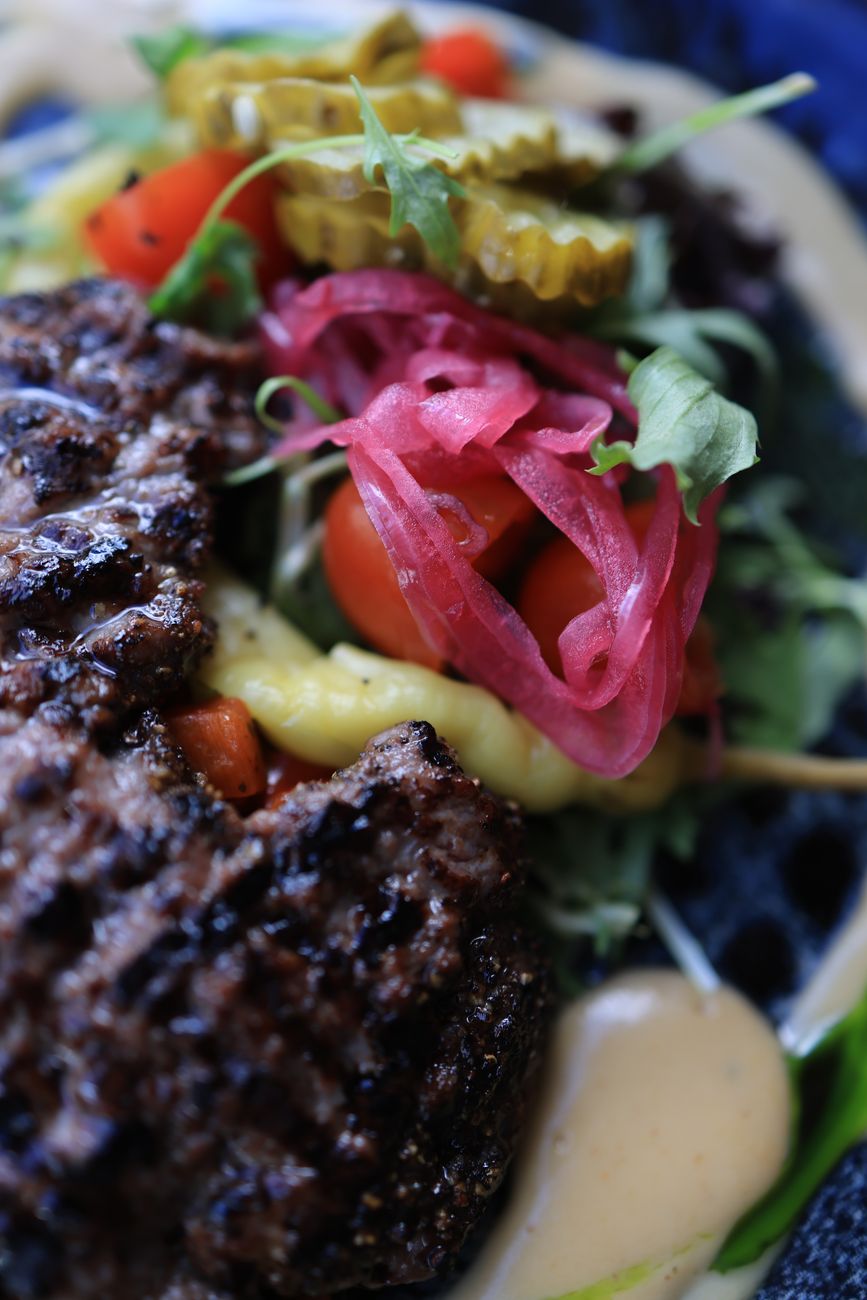
May 15, 2026Trinidad Moruga Lamb Shawarma Burger with Fire Harissa Mayo
A soul-warming Middle Eastern lamb burger that brings serious fire to the family table, with traditional shawarma spices amplified by Trinidad Moruga scorpion pepper and a cooling yogurt sauce for those brave enough to dive in. 60 min · 0 saves.
Bottle picks
Related hot sauce reviews.
Explore sauces with related ingredients, flavors, and heat levels.
Fly By Jing Sichuan Gold Review
A citrusy, tingly sauce with real peppercorn presence and enough versatility to move beyond dumplings.
Best for dumplings
Best for: Eggs and breakfast tacos
Skip if: Skip if you want a thick, smoky wing sauce more than a bright finishing bottle.
Read review
Heatonist Los Calientes Rojo Review
Heatonist Los Calientes Rojo: flavor notes, heat level, and suggested food pairings.
Best for tacos
Best for: Tacos and rice bowls
Skip if: Skip if you are chasing a novelty-level heat hit or a super-special-occasion bottle.
Read review
Yellowbird Habanero Hot Sauce Review
A bright, carrot-forward bottle with enough heat to stay lively and enough sweetness to stay versatile.
Best for tacos
Best for: Tacos and rice bowls
Skip if: Skip if you want a classic vinegar-forward table sauce with almost no sweetness.
Read review
Go deeper
Background guides that build on this.
Keep reading
More on this subject.
If this post helped, these are the next pieces most likely to keep the thread going.

science
Jun 8, 2026Middle Eastern Spicy Dishes: Dried Chiles and Cooling Accompaniments
Dried chiles, herbs, rich sauces, and cooling accompaniments create contrast in Middle Eastern spicy dishes. Explore ways to balance a plate.
science
May 2, 2026Muhammara, Harissa, and Zhug: Three Ways to Season a Meal
Roasted peppers and walnuts in muhammara, chili paste in harissa dishes, and fresh herbs in zhug bring different flavors to the table.

science
Apr 17, 2026Harissa, Aleppo Pepper, and Pomegranate Molasses
Pair harissa, Aleppo pepper, or a spicy variation on za'atar with herbs and tart pomegranate molasses in everyday cooking.
Comments
Reader discussion is shared across recipes, reviews, and editorial pieces.
Comments are read-only while member sign-in is paused.