
culture
Vietnamese Noodle Dishes: Broths, Herbs, and Chili Dressings
Compare Vietnamese noodle soups and salads, from lemongrass-scented bún bò Huế to herb-filled bowls with chili dressing.

Share this
Pass it around
Send this page to a friend, copy the link, or save it to a Pinterest board.

Save for later
Pin this page
Save the image with a link back to this recipe, review, or article.
Vietnamese cuisine has always been more nuanced than the pho-heavy menus that defined most American Vietnamese restaurants for years. Pho earned its popularity, but the country's regional spicy noodle traditions cover different ground, built on chile oil, fermented pastes, and aromatics rather than straightforward burn.
Vietnamese spicy noodle dishes differ from the tongue-numbing heat of Sichuan cooking or the sharp burn of Thai chiles. The heat builds gradually, carried by lemongrass, galangal, and fermented shrimp paste alongside fresh or dried chiles.
The Huế Heat That Started It All
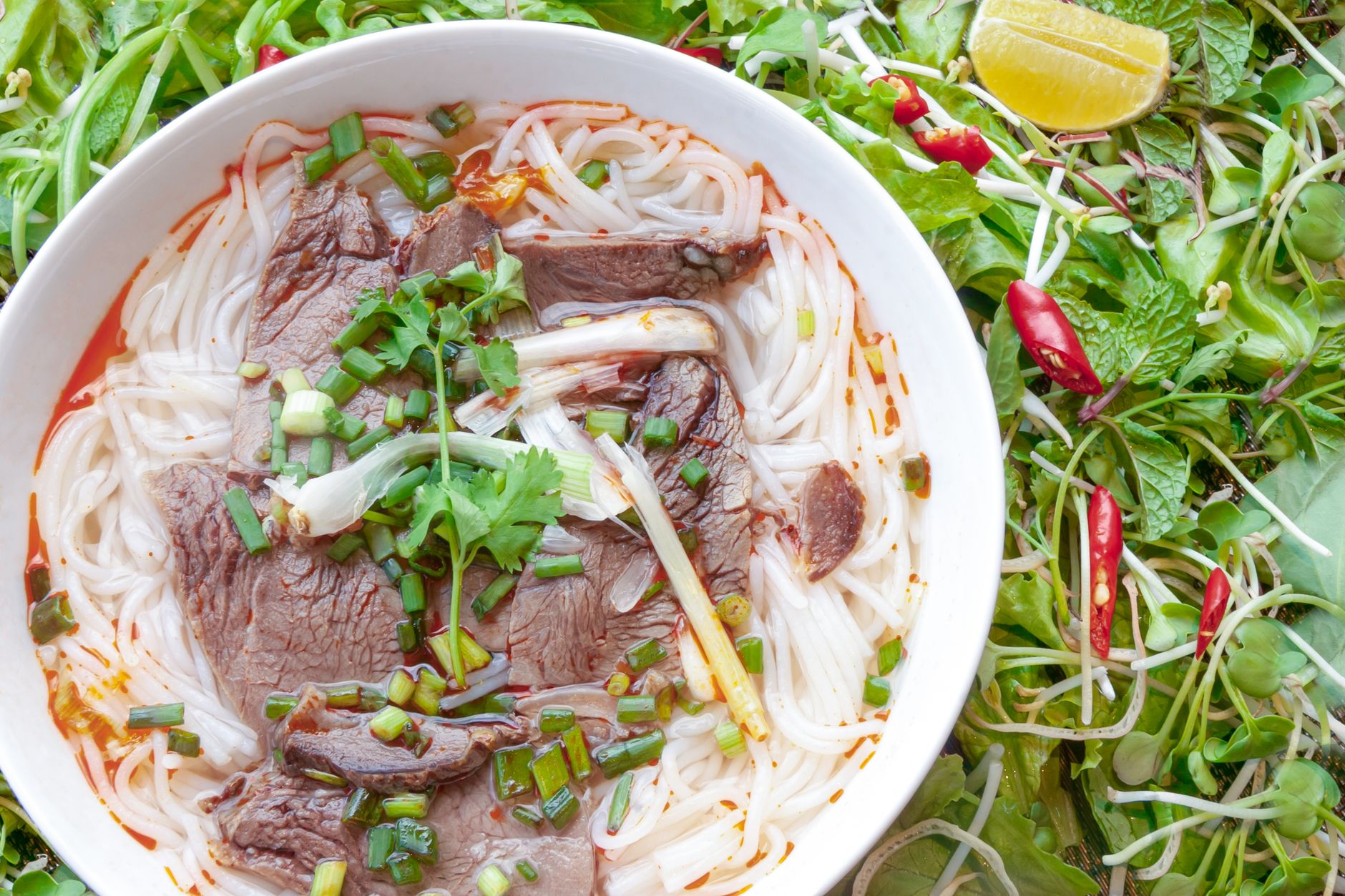
Bún bò Huế is often the first introduction many people get to Vietnamese spicy cooking beyond the occasional jalapeño floating in pho. This central Vietnamese soup carries real heat through chile oil and fresh chiles, balanced against a distinctive lemongrass-scented broth.
This dish comes from Huế, the former imperial capital, where the local cuisine is known for bolder, more assertive seasoning than the gentler northern style or sweeter southern approach. The chile oil that stains the broth red carries the flavor of annatto seeds and shallots cooked slowly until deeply fragrant.
This soup allows for a lot of spice control. The broth carries moderate warmth on its own, while fresh sliced chiles and chile oil let diners adjust the intensity at the table. The thick, chewy rice noodles hold onto broth and oil, so each bite carries heat gradually rather than all at once.
Traditional versions often include beef shank, pork knuckle, and sometimes congealed pig's blood, though lighter vegetable-forward versions are common too. Both styles rely on the same balance of heat, aromatics, and umami.
Beyond Broth: fermented flavor in Bún Riêu Cua
While bún bò Huế announces its spiciness with a red oil slick, bún riêu cua takes a different approach. This crab and tomato noodle soup builds its warmth around fermented crab paste and shrimp paste, creating a funky, oceanic character that's distinct from chile-driven heat.
The soup's foundation of fresh crab, tomatoes, and fermented shrimp paste gives it a distinct oceanic depth. Fermented seafood supplies salty, savory flavor rather than chili heat; chili condiments can be added to taste.
Bún riêu cua typically arrives with a tangle of fresh herbs, crisp lettuce, and banana blossom for cooling contrast alongside that fermented flavor. The herbs and vegetables contrast with the savory broth.
Chili can be added to bún riêu cua, while fermented seafood and tomatoes provide savory and tart flavors.
Ingredients and Preparation
Soup-based dishes might have been our introduction to Vietnamese heat, but the country's dry noodle salads offer something completely different. Bún thịt nướng and its cousins let chile-spiked dressings coat every single strand of noodle without any diluting broth getting in the way.
These salads center around a dressing built from fish sauce, lime juice, sugar, and plenty of fresh chiles—often those tiny Thai bird's eye chiles that pack serious punch without bulldozing the other flavors. Without broth to mellow things out, the chile heat stays concentrated, but all those fresh herbs, pickled vegetables, and cool noodles give your palate natural relief.
Add the dressing gradually, tasting between additions to adjust the seasoning.
What makes these salads sing:
- Fresh herbs like mint, cilantro, and Vietnamese coriander that cool and refresh between bites
- Pickled vegetables for bright acidity and satisfying crunch
- Grilled proteins that add richness without fighting the chile heat
- Rice vermicelli that soaks up all that spicy dressing without turning to mush
Chile, Herbs, and Dressing
Vietnamese spicy cooking works because it never treats heat as a solo act. Whether we're talking fermented seafood, aromatic chile oils, or fresh chile dressings balanced with herbs and acid, this cuisine understands that spice works best as part of an ensemble cast.
This approach makes Vietnamese heat appealing to those who want intensity without overwhelming burn. These dishes are built for regular eating, developing flavor through complexity rather than sheer heat alone.
The regional diversity means there's something for everyone's heat tolerance. Northern-influenced dishes lean toward gentle warmth, central Vietnamese cooking brings the most aggressive spice, and southern styles balance fire with sweetness and richness.
For home cooks, Vietnamese spicy noodle dishes are easy to adapt. Unlike dishes where heat level is fixed during cooking, most Vietnamese noodle dishes let you adjust intensity at the table with condiments, fresh chiles, or chile oils.
As interest in regional Asian cuisines and fermented flavors grows, dishes like bún bò Huế and bún riêu cua offer a different model of spicy food than the chile-forward hot sauce trend common in American cooking.
These dishes work because they use heat to bring out other flavors in the bowl rather than overwhelm them, whether you're ordering out or cooking Vietnamese-inspired meals at home.
Peppers featured in this post
Cook with this idea
Recipes to try next.
Put these ingredients and techniques to use in your next meal.

vietnamese · medium
Apr 20, 2026Vietnamese Lemongrass Pork Banh Mi Burgers
Ground pork patties infused with lemongrass and fish sauce, topped with pickled vegetables and sriracha mayo on crusty rolls 45 min · 0 saves.

vietnamese · medium
Apr 15, 2026Vietnamese Lemongrass Chicken with Chilies (Gà Nướng Sả Ớt)
Juicy chicken thighs marinated in fragrant lemongrass and fish sauce, then grilled with fresh chilies for that perfect Vietnamese balance of aromatic and spicy that builds beautifully with each bite. 45 min · 0 saves.

vietnamese · hot
May 11, 2026Vietnamese Lemongrass Wings with Scotch Bonnet Glaze
Crispy chicken wings marinated in lemongrass and fish sauce, then glazed with a fiery scotch bonnet caramel that brings serious heat with Vietnamese soul. 55 min · 0 saves.
Bottle picks
Related hot sauce reviews.
Explore sauces with related ingredients, flavors, and heat levels.
Fly By Jing Sichuan Gold Review
A citrusy, tingly sauce with real peppercorn presence and enough versatility to move beyond dumplings.
Best for dumplings
Best for: Eggs and breakfast tacos
Skip if: Skip if you want a thick, smoky wing sauce more than a bright finishing bottle.
Read review
Heatonist Los Calientes Rojo Review
Heatonist Los Calientes Rojo: flavor notes, heat level, and suggested food pairings.
Best for tacos
Best for: Tacos and rice bowls
Skip if: Skip if you are chasing a novelty-level heat hit or a super-special-occasion bottle.
Read review
Yellowbird Habanero Hot Sauce Review
A bright, carrot-forward bottle with enough heat to stay lively and enough sweetness to stay versatile.
Best for tacos
Best for: Tacos and rice bowls
Skip if: Skip if you want a classic vinegar-forward table sauce with almost no sweetness.
Read review
Go deeper
Background guides that build on this.
Keep reading
More on this subject.
If this post helped, these are the next pieces most likely to keep the thread going.
culture
Apr 28, 2026Beyond Pho: Vietnam's Bold Heat Is Having Its Moment
Vietnamese cuisine serves up incredible spicy dishes that deserve your attention far beyond the familiar comfort of pho. From the fiery specialties of Hue to chile-loaded stir-fries that'll make you sweat, these heat-forward dishes are finally getting the love they deserve from adventurous eaters.

culture
Apr 15, 2026The Spicy Vietnamese Dishes Taking Over American Tables Right Now
Vietnamese cooks have always known something about heat that the rest of us are just catching on to—it's not about the burn, it's about the balance. These three dishes show exactly why Vietnamese spice is having such a moment right now.
culture
Jun 14, 2026The Fiery Side of Vietnamese Comfort: Spicy Dishes That Define a New Generation
There's a whole world of Vietnamese cooking that goes way beyond pho—dishes that'll warm you from the inside out. From the imperial heat of bún bò Huế to the communal fire of spicy hot pot, these are the comfort foods that Vietnamese families have been passing down for generations.
Comments
Reader discussion is shared across recipes, reviews, and editorial pieces.
Comments are read-only while member sign-in is paused.