
FlamingFoodies recipe
Korean Spicy Pork Bulgogi (Daeji Bulgogi)
Tender marinated pork shoulder grilled with gochujang and Korean pear, delivering authentic medium heat with sweet and savory balance.
Gochujang-marinated pork shoulder grilled to caramelized perfection with Korean pear and sesame oil.
Ingredients
Marinade
- 1 mediumKorean pear, grated
- 3 tbspgochujang
- 2 tbspsoy sauce
- 2 tbspbrown sugar
- 1 tbspsesame oil
- 1 tbsprice wine, or mirin
- 4 clovesgarlic, minced
- 1 tbspfresh ginger, minced
Garnish
- 3 mediumscallions, chopped
- 1 tbsptoasted sesame seeds
Method
1. Create the Gochujang Marinade Whisk together grated Korean pear, gochujang, soy sauce, brown sugar, sesame oil, rice wine, minced garlic, and ginger until the sugar dissolves completely. The pear's natural enzymes will help tenderize the meat while its sweetness balances the gochujang's heat.
Watch for: The marinade should be glossy and deep red-orange in color
2. Marinate the Pork Add the sliced pork shoulder to the marinade, using your hands to massage the mixture into every piece. Cover the bowl with plastic wrap and refrigerate, allowing the gochujang's complex heat to penetrate the meat.
Watch for: The pork should be completely coated and slightly darker in color
3. Heat the Cooking Surface Preheat a large cast iron skillet or grill pan over medium-high heat and add neutral oil. The high heat is crucial for achieving the signature caramelized edges that make bulgogi so addictive.
Watch for: Oil should shimmer and move freely across the pan
4. Grill the Marinated Pork Working in batches to avoid overcrowding, cook the pork pieces for 3-4 minutes per side without moving them initially. The marinade will caramelize and create a glossy, slightly charred exterior while the meat stays tender inside.
Watch for: Look for deep caramelization and sizzling edges before flipping
Tip: Don't overlap pieces or they'll steam instead of caramelize
Equipment
- large mixing bowl
- cast iron skillet or grill pan
- sharp knife
- cutting board
- box grater
Make ahead
- Marinate pork up to 24 hours in advance. The longer marination develops deeper flavors and more tender texture.
Storage
- Store leftover cooked bulgogi in refrigerator for up to 3 days in an airtight container.
Reheat
- Reheat gently in a skillet over medium heat for 2-3 minutes, or microwave in 30-second intervals to avoid overcooking.
Top tips
- Freeze pork for 30 minutes before slicing for cleaner, thinner cuts
- Save some marinade separately before adding raw pork to use as a sauce
- Double the recipe and freeze half the marinated pork for quick weeknight meals
Substitutions
- Replace Korean pear with regular pear or apple
- Use mirin instead of rice wine
- Substitute honey for brown sugar
Serve with
- Serve over steamed white rice with banchan (Korean side dishes)
- Wrap in butter lettuce leaves with fresh garlic and ssamjang
- Use as filling for Korean tacos with pickled vegetables
Find another recipe
Open archive →Korean Spicy Pork Bulgogi (Daeji Bulgogi)
Tender marinated pork shoulder grilled with gochujang and Korean pear, delivering authentic medium heat with sweet and savory balance.
Prep
20 min
Cook
12 min
Active
32 min
Total
32 min
Yield
4 servings
Share this
Pass it around
Send this page to a friend, copy the link, or save it to a Pinterest board.
Save for later
Pin this page
Save the image with a link back to this recipe, review, or article.
Recipe notes
Before you cook
This fiery take on bulgogi swaps beef for pork shoulder, marinated in a gochujang-spiked sauce that builds gentle heat while maintaining the dish's signature sweet-savory profile. The Korean pear tenderizes the meat while adding subtle sweetness that balances the chili paste's earthy burn.
Total time
32 min
Prep: 20 min. Cook: 12 min.
Yield
4 servings
The ingredient quantities below are for this yield.
Method
How to cook it
Use the step navigator to move around, or stay in cook mode and work top to bottom.
- 1
Step 1 of 4
Create the Gochujang Marinade
Whisk together grated Korean pear, gochujang, soy sauce, brown sugar, sesame oil, rice wine, minced garlic, and ginger until the sugar dissolves completely. The pear's natural enzymes will help tenderize the meat while its sweetness balances the gochujang's heat.
- 2
Step 2 of 4
Marinate the Pork
Add the sliced pork shoulder to the marinade, using your hands to massage the mixture into every piece. Cover the bowl with plastic wrap and refrigerate, allowing the gochujang's complex heat to penetrate the meat.
- 3
Step 3 of 4
Heat the Cooking Surface
Preheat a large cast iron skillet or grill pan over medium-high heat and add neutral oil. The high heat is crucial for achieving the signature caramelized edges that make bulgogi so addictive.
- 4
Step 4 of 4
Grill the Marinated Pork
Working in batches to avoid overcrowding, cook the pork pieces for 3-4 minutes per side without moving them initially. The marinade will caramelize and create a glossy, slightly charred exterior while the meat stays tender inside.
Troubleshooting
Tips that matter
- Freeze pork for 30 minutes before slicing for cleaner, thinner cuts
- Save some marinade separately before adding raw pork to use as a sauce
- Double the recipe and freeze half the marinated pork for quick weeknight meals
Substitutions and variations
Storage and leftovers
Plan ahead and reheat well
Make ahead
Marinate pork up to 24 hours in advance. The longer marination develops deeper flavors and more tender texture.
Storage
Store leftover cooked bulgogi in refrigerator for up to 3 days in an airtight container.
Reheat
Reheat gently in a skillet over medium heat for 2-3 minutes, or microwave in 30-second intervals to avoid overcooking.
At the table
Serving suggestions
- Serve over steamed white rice with banchan (Korean side dishes)
- Wrap in butter lettuce leaves with fresh garlic and ssamjang
- Use as filling for Korean tacos with pickled vegetables
FAQ
Common questions
Can I use a different cut of pork?
Yes, pork belly or pork loin work well. Pork belly will be richer, while loin will be leaner. Adjust cooking time accordingly.
How spicy is this compared to restaurant bulgogi?
This has more heat than typical bulgogi due to the gochujang, but it's balanced by the pear's sweetness. It builds warmth rather than immediate fire.
Can I cook this on an outdoor grill?
Absolutely! Use a grill basket or foil to prevent small pieces from falling through the grates. Cook over medium-high direct heat.
Heat profile
Medium heat
The recipe is classified as medium. Use less chile if you prefer milder food.
Skill level
Intermediate
Check the method for steps that need to be prepared at the same time.
Total time
32 min
Prep: 20 min. Cook: 12 min.
Yield
4 servings
The ingredient quantities below are for this yield.
Cook this with
Three useful buys before you start
A sauce, a pantry ingredient, and a kitchen tool to consider for this dish.
Sauce
Yellowbird Habanero
Yellowbird · Best for tacos
It brings enough heat to cut through the richer bites without flattening the rest of the dish.
Get the sauce used herePantry
Chung Jung One Gochujang Paste
Flavor builder
Layered heat with umami. Fermented chili paste for noodles, wings, marinades, and that sweet-savory Korean backbone.
Grab the pantry stapleGear
Carbon Steel Wok
Fast heat
High-heat noodles and fried rice. Built for smoky stir-fries, chili oil noodles, and any dinner that needs real burner contact.
Use this toolPair this with
The right bottle for this recipe
These sauce picks are matched to the dish itself, not dropped in at random. Use them to finish, sharpen, or push the heat where it helps.
Yellowbird Habanero
It brings enough heat to cut through the richer bites without flattening the rest of the dish.
A bright, carrot-forward bottle with enough heat to stay lively and enough sweetness to stay versatile.
Scotch Bonnet and Ginger
It brings enough heat to cut through the richer bites without flattening the rest of the dish.
A bright, elegant sauce that leans on fruit, ginger, and Scotch bonnet lift instead of brute force.
Shop the pantry
Pantry staples for this recipe
Flavor builder
$8-$15Chung Jung One Gochujang Paste
Layered heat with umami. Fermented chili paste for noodles, wings, marinades, and that sweet-savory Korean backbone.
Check price on AmazonClean chile hit
$7-$12Huy Fong Sambal Oelek
Fried rice, noodles, and spicy sauces. Straight chili paste for fried rice, noodle sauces, mayo mixes, and dishes that want heat without sweetness.
Check price on AmazonChar-ready marinade
$8-$14Nando's Medium Peri-Peri Sauce
Chicken, skewers, and grilled vegetables. The bottle to grab when chicken needs acid, garlic, and real heat before it hits the grill or broiler.
Check price on AmazonRecommended equipment
Cooking tools
Fast heat
$35-$70Carbon Steel Wok
High-heat noodles and fried rice. Built for smoky stir-fries, chili oil noodles, and any dinner that needs real burner contact.
Check price on AmazonMeal-prep anchor
$30-$60Compact Rice Cooker
Bowls, fried rice, and weekly meal prep. A simple countertop win for rice bowls, congee, spicy fried rice, and the carb base that makes leftovers useful.
Check price on AmazonCook next
More recipes with similar heat
These are the next recipes most likely to fit the same mood, pantry, or heat level once this one is in your rotation.
korean · medium
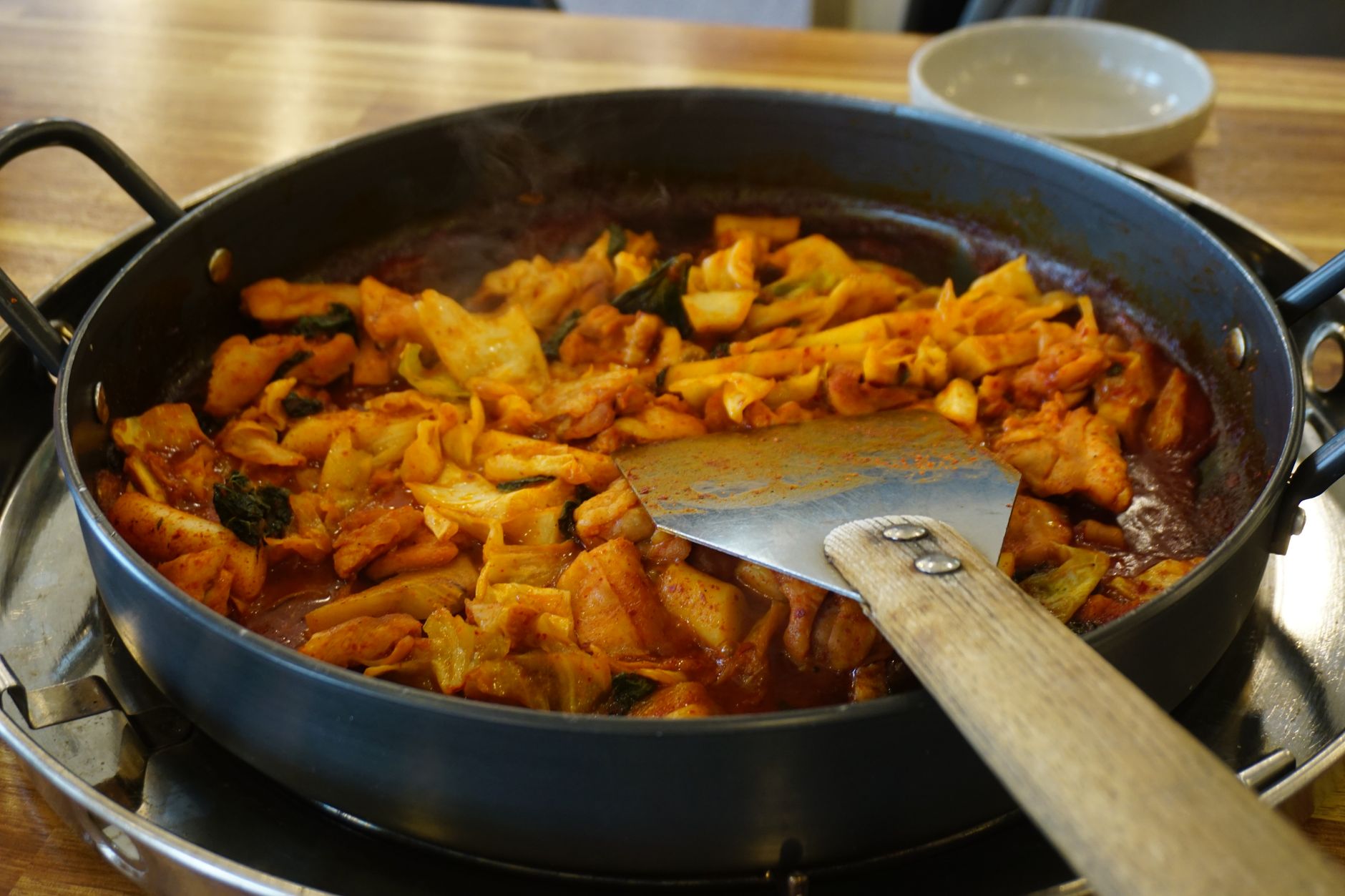
Apr 6, 2026Dak Galbi (Korean Spicy Stir-Fried Chicken)
A sizzling Korean stir-fry featuring tender chicken, crisp vegetables, and chewy rice cakes in a sweet-spicy gochujang glaze that delivers perfect medium heat. 35 min · 0 saves.

korean · reaper
May 23, 2026Reaper Bulgogi Galbi with Charred Scallions
Korean short ribs marinated in a Carolina Reaper gochujang glaze, grilled until deeply caramelized and served with fire-kissed scallions 50 min · 0 saves.
korean · hot
Apr 5, 2026Fire Chicken (Buldak) with Ghost Pepper Gochujang
An intensely spicy Korean fire chicken that pushes traditional buldak to scorching new heights with ghost pepper-infused gochujang and fresh habaneros. 45 min · 0 saves.
FlamingFoodies picks
Pantry, gear, and bottle picks that fit this meal
Everyday bottle
Yellowbird Habanero Hot Sauce
Bright carrot-habanero heat with enough body to work on eggs, tacos, and roasted vegetables. Best for breakfasts, tacos, and meal prep bowls.
View on AmazonNumbing heat
Fly By Jing Sichuan Gold
A more citrusy, peppercorn-leaning sauce when you want flavor movement instead of pure capsaicin. Best for dumplings, noodles, and fried eggs.
View on AmazonFrom the blog
More about this dish
Read more about the ingredients and cuisine.

culture
May 1, 2026Beyond Kimchi: Korean Spicy Dishes Taking Over Tables Right Now
Korean heat goes so much deeper than kimchi and gochujang. From sticky-sweet fire chicken to those impossibly addictive rice cakes, these dishes reveal why Korean spice mastery has completely won us over.

culture
Apr 22, 2026Five Korean Spicy Dishes That Are Changing How We Crave Heat
Korean spicy food doesn't just burn—it builds layers of heat that keep drawing you back for more. These five dishes show why fermented fire and gochujang glazes create the kind of cravings that make you rethink everything you thought you knew about spice.
Background guides
Read the guide behind the technique
Learn more about the cooking techniques used here.
Community notes
Reader discussion is shared across recipes, reviews, and editorial pieces.
Comments are read-only while member sign-in is paused.