
guides
How Korean Chilli Pastes Build Layered Heat
A practical guide to the sweet, fermented, and deeply savory spice architecture behind Korean cooking.

Share this
Pass it around
Send this page to a friend, copy the link, or save it to a Pinterest board.

Save for later
Pin this page
Save the image with a link back to this recipe, review, or article.
Fermentation changes the shape of heat
Korean chilli pastes do not just deliver capsaicin. They bring sweetness, umami, and a slow-building warmth that keeps dishes feeling rounded instead of sharp.
Gochujang is not gochugaru
One gives you a thick, savory backbone. The other offers a brighter, more direct pepper note. The best spicy Korean dishes often rely on both.
Layering matters more than max heat
When you build with aromatic base notes, acid, and just enough sweetness, even a hot dish stays craveable. That is the difference between punishing spice and magnetic heat.
Peppers featured in this post
Cook with this idea
Recipes to try next.
Put these ingredients and techniques to use in your next meal.
korean · medium
Apr 14, 2026Korean Spicy Pork Bulgogi (Daeji Bulgogi)
Tender marinated pork shoulder grilled with gochujang and Korean pear, delivering authentic medium heat with sweet and savory balance. 32 min · 0 saves.
korean · medium
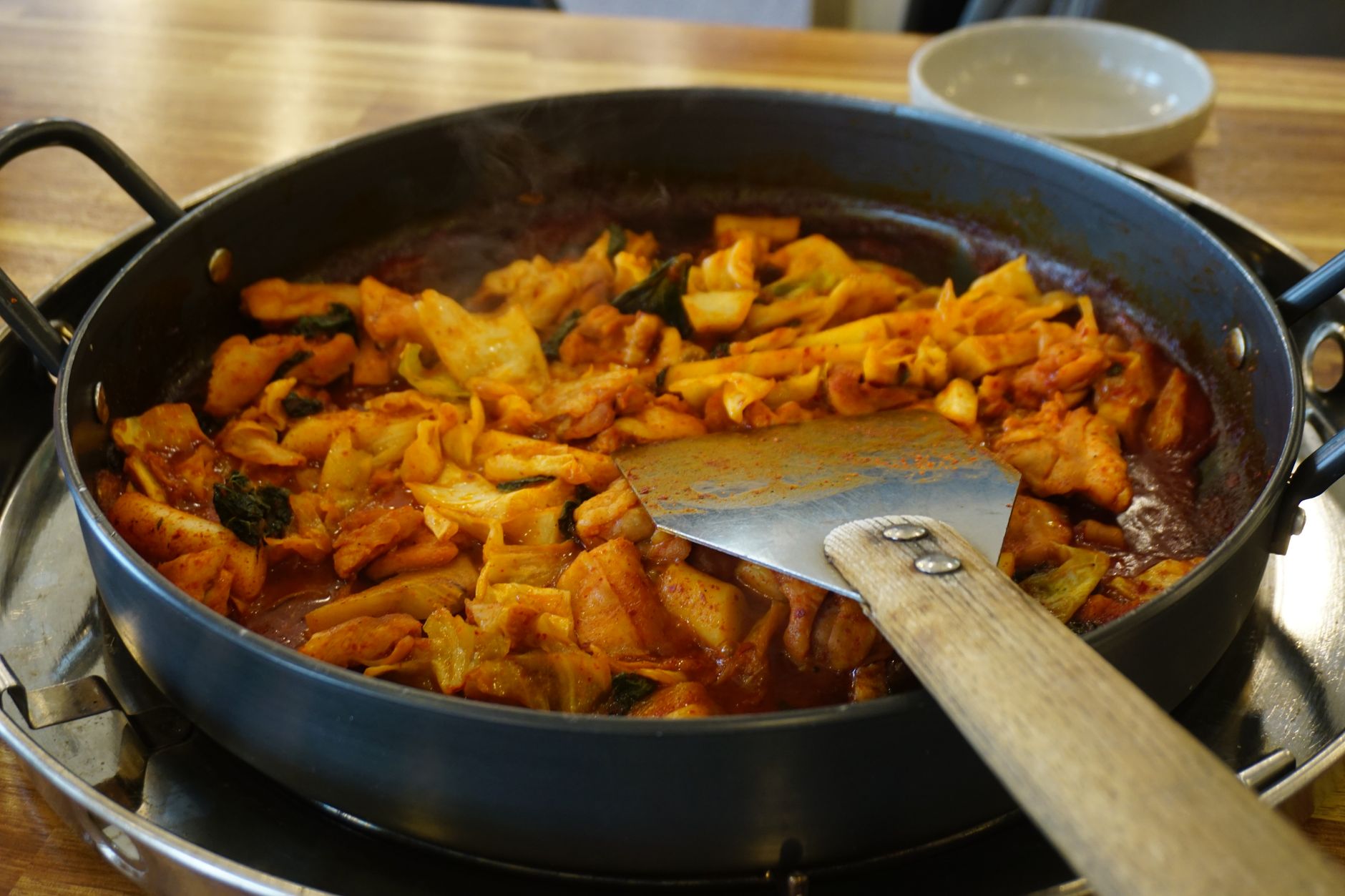
Apr 6, 2026Dak Galbi (Korean Spicy Stir-Fried Chicken)
A sizzling Korean stir-fry featuring tender chicken, crisp vegetables, and chewy rice cakes in a sweet-spicy gochujang glaze that delivers perfect medium heat. 35 min · 0 saves.

korean · mild
Sep 6, 2026Gochujang-Glazed Chicken Wings
Tender, glossy chicken wings coated in a mild gochujang glaze with sesame and garlic. The heat is gentle and rounded, never sharp—perfect for sharing without worry about tolerance gaps at the table. 50 min · 0 saves.
Bottle picks
Related hot sauce reviews.
Explore sauces with related ingredients, flavors, and heat levels.
Heatonist Los Calientes Rojo Review
Heatonist Los Calientes Rojo: flavor notes, heat level, and suggested food pairings.
Best for tacos
Best for: Tacos and rice bowls
Skip if: Skip if you are chasing a novelty-level heat hit or a super-special-occasion bottle.
Read review
Mike's Hot Honey Review
Sweet heat done right: sticky, quick, and versatile enough to become a finishing move instead of a novelty.
Best for gifting
Best for: Pizza and fried chicken
Skip if: Skip if you want a classic vinegar-forward table sauce with almost no sweetness.
Read review
Yellowbird Habanero Hot Sauce Review
A bright, carrot-forward bottle with enough heat to stay lively and enough sweetness to stay versatile.
Best for tacos
Best for: Tacos and rice bowls
Skip if: Skip if you want a classic vinegar-forward table sauce with almost no sweetness.
Read review
Go deeper
Background guides that build on this.
Keep reading
More on this subject.
If this post helped, these are the next pieces most likely to keep the thread going.
guides
Apr 4, 2026How to Choose a Hot Sauce for Seafood, Fish, and Ceviche
A buying guide for seafood-friendly hot sauces that work on shrimp, grilled fish, fish tacos, and ceviche without flattening the plate.
guides
Apr 3, 2026How to Pick a Hot Sauce for Eggs, Breakfast Tacos, and Hash
What actually works at breakfast: bright pours, chili crisps, and bottles you can use generously before noon.
guides
Apr 2, 2026How to Build Your First Hot Sauce Shelf
A practical way to build a useful starter shelf without overbuying novelty bottles or expensive gift sets.
Comments
Reader discussion is shared across recipes, reviews, and editorial pieces.
Comments are read-only while member sign-in is paused.