
Fresno
Also known as: fresno pepper, fresno chile
The Fresno pepper looks almost identical to a red jalapeño and is frequently confused with one. Bred in Fresno, California in 1952, it has slightly different flavor and a marginally hotter heat profile, with a smokier, fruitier character that makes it a craft hot sauce favorite.
Scoville
3K–10K SHU
Heat
Medium
Origin
north america
Species
C. annuum
Type
Fresh pod
Plant height
24–30 in
Heat profile
Medium heat — 3K–10K SHU
See the full scoville scale →Flavor profile
Bright, slightly fruity, with a clean medium heat — like a red jalapeño with more fruit and less vegetal character.
The Fresno is one of the most useful peppers most people have never heard of. At a glance it looks like a red jalapeño; in the kitchen it behaves like a slightly fruitier, slightly hotter version. Craft hot sauce makers favor it for that fruit character — Hot Ones' Yellowbird and Cholula's Hot Sauce both use Fresno or Fresno-derived peppers. Whole Foods and other higher-end grocers stock fresh Fresnos year-round; mainstream stores are catching up. Worth knowing as both a substitute and a primary ingredient.
Color
Bright red (occasionally green when unripe)
Did you know
The Fresno pepper was first developed by Clarence Brown Hamlin in 1952 at the California Department of Agriculture in Fresno. It was registered specifically as a milder, sweeter alternative to red jalapeños for the canning industry — though today it's more often used fresh.
How to use it
- —Quick-pickled for tacos, sandwiches, and burgers
- —Sliced fresh into salsas and pico de gallo (a sweeter version)
- —Roasted and blended into bright red hot sauces
- —Stir-fried into Asian preparations where its fruit notes work well
- —Substituted for red jalapeño in nearly any recipe
Pairs well with
Substitutes
Can't find fresno? Try one of these.
Jalapeño
1:1 (use a red jalapeño if available)3K–8K SHU
Functionally interchangeable. A red jalapeño is the closest swap by appearance and flavor; a green jalapeño works but loses the fruit-forward character.
Serrano
Use ⅔ as many serranos10K–23K SHU
Hotter and less fruity; works when you need similar bright heat but more intensity.
How to grow it
Growing fresno at home
USDA zones
Perennial in 9–11, annual in 4–8
Germinate
7–14 days
To harvest
~75 days from transplant
Plant height
24–30 in
Sun
full sun
Water
moderate
Container
Container-friendly
Easy to grow — behaves similarly to jalapeño with a slightly more upright plant habit. Plants are productive (20–30 pods per season) and start producing earlier than chinense varieties. Container-friendly with a 3-gallon pot. Harvest fully red for the characteristic Fresno flavor; green Fresnos taste closer to green jalapeño.
Where to find it
Buying fresno
Fresh
Increasingly common at upscale US grocers (Whole Foods, Sprouts, Trader Joe's); standard at Mexican markets. Year-round availability in California, seasonal elsewhere.
Dried
Less common dried than fresh. Some specialty pepper retailers sell dried Fresnos for use in chili blends.
Seasonality
Peak field-grown August–October; year-round greenhouse and California production.
Seed sources
- Burpee
- Bonnie Plants
- Baker Creek
- Pepper Joe's
If your grocer stocks 'red jalapeños' and they look glossy and slightly fatter than green jalapeños, there's a decent chance they're actually Fresnos. The two are often labeled interchangeably in mainstream stores. Either works for most recipes.
History & origin
Where fresno comes from
Clarence Brown Hamlin developed the Fresno cultivar at the California Department of Agriculture as a more uniform, slightly milder alternative to red jalapeños for industrial canning. The pepper found its commercial niche fresh rather than canned and has steadily gained popularity at upscale grocers since the 2000s. The combination of red jalapeño appearance with a slightly fruitier flavor has made it a favorite of craft chefs and sauce producers.
Cook with it
Recipes that use fresno.

mexican · hot
Oct 18, 2026Habanero Chicken and Charred Corn Rice Bowl
A composed rice bowl with charred corn, habanero-marinated chicken, black beans, and a roasted habanero crema. Heat builds from the marinated chicken and finishes with bright chile warmth in the sauce. 60 min · 0 saves.
american · reaper
Oct 12, 2026Garlic Reaper Shrimp with Charred Scallions
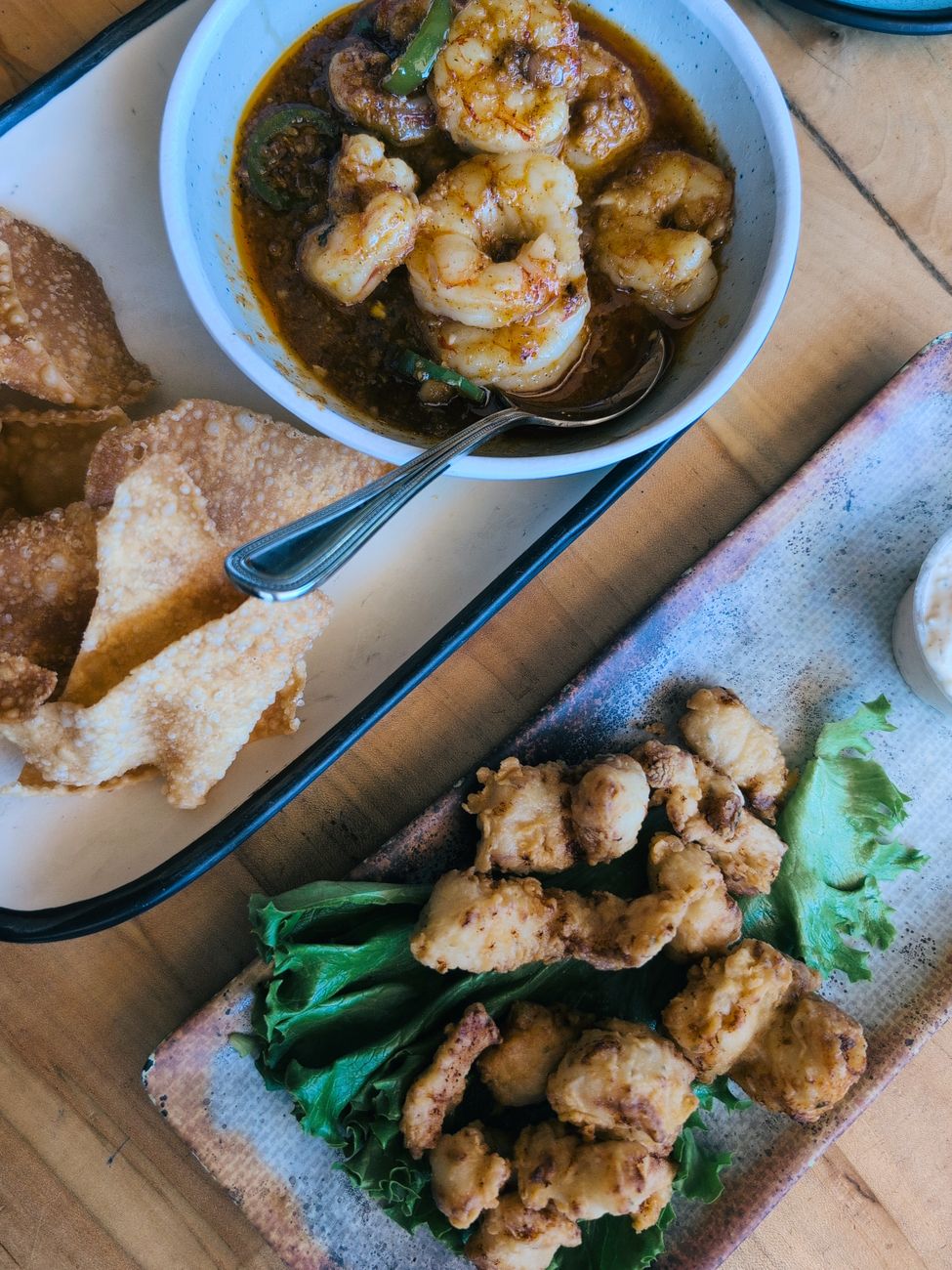
Large shrimp seared until golden, tossed with Torchbearer Garlic Reaper sauce and finished with crispy garlic chips and charred scallion greens. The sauce clings to the shrimp without overwhelming the sweetness of the protein, and the heat builds steadily rather than hitting all at once. 20 min · 0 saves.

mexican · inferno
Oct 9, 2026Charred Chicken Wings with 7-Pot Chile and Lime
Whole chicken wings coated in a roasted 7-pot chile paste, charred until blistered, and finished with fresh lime and fleur de sel. For heat lovers who want chile flavor to drive the dish, not mask it. 45 min · 0 saves.
From the blog
Articles about fresno.

culture
May 30, 2026Greece's Hottest Kitchen Secrets: Why Spicy Greek Cooking Is Having a Moment
From fiery feta spreads that'll surprise your guests to pepper-braised meats that make you understand why Greek grandmothers always kept the good olive oil handy, this is the spicy side of Greek cooking that deserves a place at your table.

culture
May 14, 2026The Fiery Side of Greece: Three Spicy Dishes That Deserve Your Attention
Beyond the familiar Greek dishes lies a spicier tradition featuring smoky peppers, chile-spiked sauces, and heat that builds slowly. These three regional specialties bring serious warmth to the Greek table.
Background reading
Guides that cover fresno.
Similar peppers
Other medium peppers
Frequently asked
Common questions about fresno
Is a Fresno pepper the same as a red jalapeño?
Different cultivars, but very similar. Fresno was bred separately from jalapeño in 1952. The pepper looks almost identical to a ripe red jalapeño but is slightly fruitier in flavor and a touch hotter on average. Most grocers don't distinguish, and they're often interchangeable in recipes.
How spicy is a Fresno?
Medium — 2,500 to 10,000 Scoville Heat Units. That's the same range as jalapeño but biased toward the high end. Most Fresnos taste hotter than typical green jalapeños but milder than serrano. Predictable heat with a noticeable fruit note.
Can you eat Fresno peppers raw?
Yes — that's their most common use. Sliced raw into salsas, pico de gallo, pickled toppings, and salads. The flavor is bright and fruity raw; roasting deepens it but isn't necessary. The thin walls work well for quick pickling (5 minutes in hot vinegar with sugar).
What hot sauces are made with Fresno peppers?
Several craft sauces feature Fresno specifically — Hot Ones' first season sauces drew heavily from Fresno, and brands like Truff, Yellowbird's Serrano, and various small-batch producers use Fresno as the base. Many 'red jalapeño' sauces are actually Fresno-based without distinguishing in marketing.
Pantry examples
If you want to taste fresno in a bottle or pantry product
These are optional examples of how this pepper shows up in real products. The profile above stands on its own even if you never shop from this section.
Most-poured bottle
Cholula Original Hot Sauce
The best-selling Mexican hot sauce in the US — mild enough for any table, bright enough for eggs, tacos, pizza, and cocktails. The bottle most people already trust.
View example ↗Milder entry
Yellowbird Serrano Hot Sauce
Same Yellowbird quality at a gentler heat level — serrano and tangerine with a cleaner, brighter profile. The right pick for people who find habanero too sharp.
View example ↗