
science
Salsa Macha, Pozole Rojo, and Al Pastor: Chiles and Technique
Toasted chiles in salsa macha, a red pozole broth, and al pastor's seasoned crust offer distinct ways to cook with Mexican chiles.
Share this
Pass it around
Send this page to a friend, copy the link, or save it to a Pinterest board.

Save for later
Pin this page
Save the image with a link back to this recipe, review, or article.
Salsa Macha, Pozole Rojo, and Al Pastor: Chiles and Technique
Mexican cooking often builds heat in stages, combining different types of dried and fresh chiles rather than leaning on a single source of intensity. Salsa macha, pozole rojo, and al pastor each do this differently, and understanding how gives you a better sense of how to recreate them at home.
Salsa Macha: Built From Toasted Chiles and Nuts
Salsa macha works especially well on:
- Grilled meat, where the char flavors complement each other
- Fresh queso fresco, where mild dairy fat carries the oily heat
- Fried eggs
- Simple grilled vegetables that benefit from both smoke and depth
Pozole Rojo: Heat That Builds Slowly
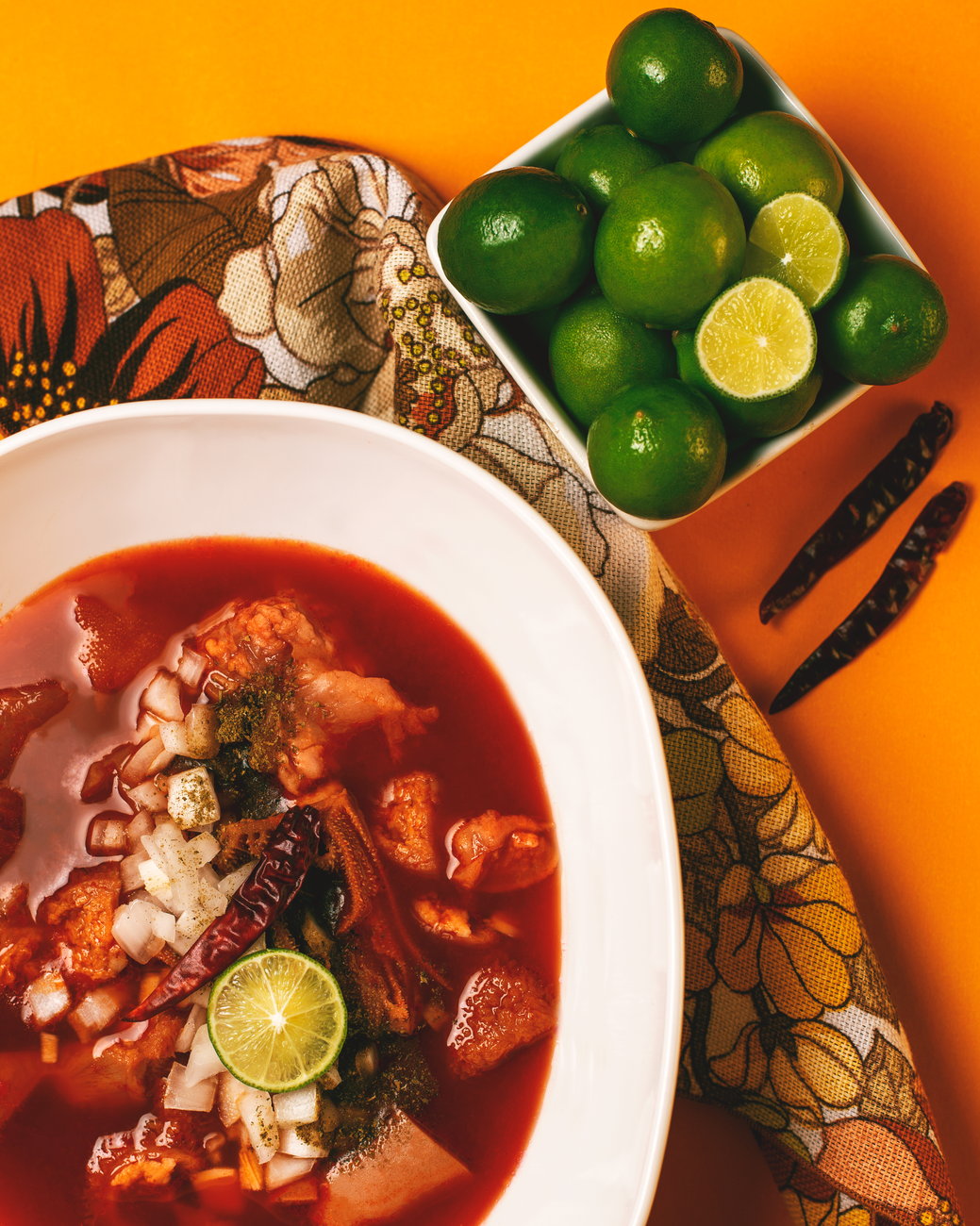
Pozole rojo takes a different approach, building heat gradually through guajillo and ancho chiles rather than delivering it all at once. The result is a broth that feels warming rather than sharp, closer to a slow simmer than a quick hit of spice.
The hominy kernels add a mechanical contrast—each bite has a slight pop and chew that plays against the smooth broth.
The garnishes matter as much as the broth itself. Since you add lime, oregano, radish, and chile pequín at the table, you can adjust the heat and acidity throughout the meal instead of eating the same bowl start to finish.
Al Pastor: Multiple Layers of Heat and Contrast
Al pastor combines several heat sources at once: the guajillo and chipotle marinade, whatever salsa you add at the end, and the char that develops from cooking on a trompo. The caramelization from that cooking method concentrates the chile flavors, and the contrast between hot, fatty meat and cool, acidic salsa and fresh aromatics adds another layer.
The pineapple in al pastor isn't just decorative. Its sweetness offsets the chile heat and gives you a break between bites, which is part of why the dish can carry more heat overall without feeling one-note.
Tortilla choice affects how the dish reads, too. Fresh masa tortillas bring a mild corn sweetness that complements chile heat, and their slightly rough texture holds salsa more evenly than a smooth flour tortilla does. Flour tortillas work fine, but they distribute salsa differently and don't bring the same corn flavor to the plate.
Making It Work in Your Kitchen
Once you understand how these dishes build heat, you can recreate that balance at home instead of just adding more chiles. Salsa macha rewards a careful toast and a mix of textures. Pozole rojo depends on layering guajillo and ancho chiles for a slow build, with garnishes doing a lot of the work at the table. Al pastor benefits from balancing marinade, char, and a bright, acidic salsa to offset the richness of the meat.
These dishes reward attention to ingredient choice and technique—toasting, garnishing, layering marinades—more than any single trick for making food "spicier."
Peppers featured in this post
Cook with this idea
Recipes to try next.
Put these ingredients and techniques to use in your next meal.

mexican · hot
Oct 18, 2026Habanero Chicken and Charred Corn Rice Bowl
A composed rice bowl with charred corn, habanero-marinated chicken, black beans, and a roasted habanero crema. Heat builds from the marinated chicken and finishes with bright chile warmth in the sauce. 60 min · 0 saves.

mexican · hot
Oct 7, 2026Habanero Chicken and Black Bean Rice Bowl with Charred Tomatillo Salsa
A composed Mexican rice bowl layered with cilantro-lime rice, habanero-marinated chicken thighs, black beans, and charred tomatillo salsa. The heat builds steadily from the chicken through the sauce without overwhelming each component. 60 min · 0 saves.

mexican · hot
Jun 1, 2026Habanero-Glazed Wings with Cilantro-Lime Crema
Crispy baked chicken wings tossed in a glossy habanero-honey glaze with cooling cilantro-lime crema for dipping. 60 min · 0 saves.
Bottle picks
Related hot sauce reviews.
Explore sauces with related ingredients, flavors, and heat levels.
Yellowbird Habanero Hot Sauce Review
A bright, carrot-forward bottle with enough heat to stay lively and enough sweetness to stay versatile.
Best for tacos
Best for: Tacos and rice bowls
Skip if: Skip if you want a classic vinegar-forward table sauce with almost no sweetness.
Read review
Heatonist Los Calientes Rojo Review
Heatonist Los Calientes Rojo: flavor notes, heat level, and suggested food pairings.
Best for tacos
Best for: Tacos and rice bowls
Skip if: Skip if you are chasing a novelty-level heat hit or a super-special-occasion bottle.
Read review
Queen Majesty Scotch Bonnet and Ginger Review
A bright, elegant sauce that leans on fruit, ginger, and Scotch bonnet lift instead of brute force.
Best for seafood
Best for: Seafood and fish tacos
Skip if: Skip if you want a thick, smoky wing sauce more than a bright finishing bottle.
Read review
Go deeper
Background guides that build on this.
Keep reading
More on this subject.
If this post helped, these are the next pieces most likely to keep the thread going.
science
May 23, 2026Mexican Chile Broths, Fresh Salsas, and Charred Preparations
Compare slow-simmered Mexican chile broths, fresh acidic salsas, and charred preparations, with cooking details for each approach.
science
Oct 10, 2026Why Chili Oil and Numbing Heat Drive the Spiciest Chinese Dishes Right Now
Two kinds of heat drive the spicy Chinese dishes worth craving: the numbing tingle of Sichuan peppercorn and the slow burn of infused chili oil. Learn how they work together, which dried chilies matter, and how to build layered heat that enhances flavor instead of flattening it.

science
Jun 14, 2026Filipino Cooking with Chili, Vinegar, and Coconut Milk
Explore the use of chili, vinegar, coconut milk, and fermented ingredients in Filipino dishes such as Bicol express and laing.
Comments
Reader discussion is shared across recipes, reviews, and editorial pieces.
Comments are read-only while member sign-in is paused.