
science
Chili, Fresh Herbs, and Fermented Ingredients in Vietnamese Cooking
Fresh herbs, chili, fermented seasonings, and caramelized ingredients give Vietnamese dishes several different kinds of contrast.
Share this
Pass it around
Send this page to a friend, copy the link, or save it to a Pinterest board.

Save for later
Pin this page
Save the image with a link back to this recipe, review, or article.
Cooking with Vietnamese Heat
Vietnamese spicy food works differently from the straightforward chili heat many people expect. Thai bird's eye chilies bring real fire, but fermentation, fresh herbs, and specific cooking techniques also shape how the heat and flavor come together in a dish.
Tương ớt tỏi, the fermented chili-garlic sauce used throughout Vietnamese cooking, gets its tang and depth from fermentation, which softens the sharper edges of raw chili and builds a more rounded flavor over time. The result is a sauce where heat unfolds across a few bites rather than hitting all at once.
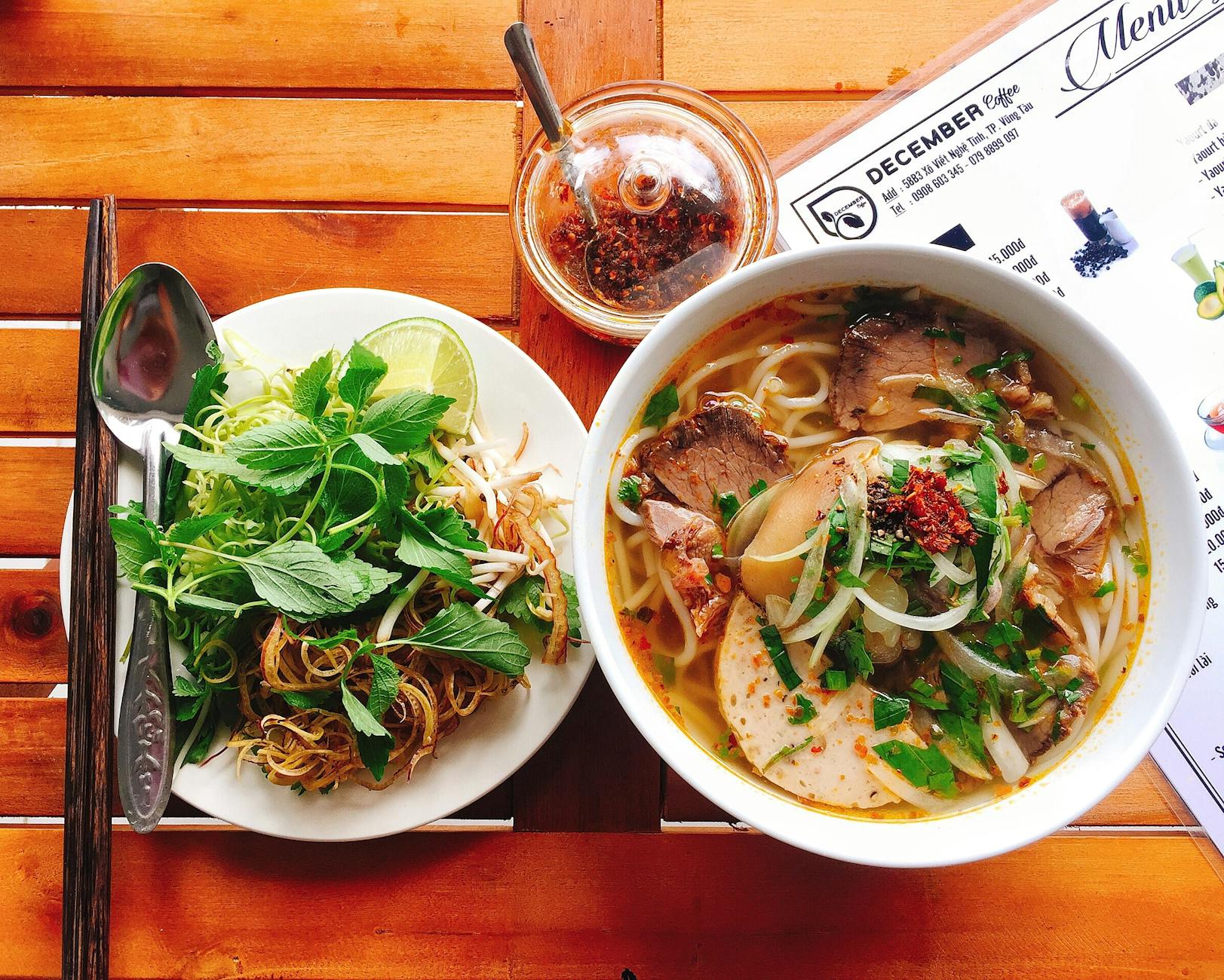
Fresh herbs piled alongside Vietnamese meals aren't just garnish. Their aroma adds a distinct layer to the dish as you eat, alongside the chili heat and other seasonings. Together, these elements make a Vietnamese spicy dish feel more layered than one built around hot sauce alone.
Fermented Flavor: Bún Bò Huế and Complex Heat
Bún bò huế shows how Vietnamese heat comes from more than chilies alone. The broth starts with fermented shrimp paste and chili oil, both aged ingredients that bring a deep, savory quality similar to what aging does for hard cheeses or cured meats. Fresh bird's eye chilies and aromatic herbs add heat and brightness on top of that base.
Lemongrass is a key aromatic in traditional bún bò huế, contributing a bright citrus note that plays against the richness of the broth. Thick rice noodles round out the bowl, giving the dish substance to carry alongside the broth's heat.
Some Vietnamese-American restaurants build on this base by aging their chili oils longer or blending multiple pepper varieties—for example dried Hatch chilies alongside traditional Vietnamese peppers—to vary the heat and flavor across a bowl.
The Caramel-Fire Combination
Vietnamese cooking's distinctive spicy technique shows up in cà ri gà, curry dishes that pair caramelized palm sugar with chili heat. Caramelizing sugar over heat creates a deep, slightly bitter sweetness through browning, and that sweetness plays against the heat of the curry rather than simply canceling it out.
This contrast is part of why Vietnamese curry can taste more complex than the ingredient list suggests: sweet, savory, and spicy notes all show up in the same spoonful.
Traditional cà ri gà also includes galangal and makrut lime leaves, which add citrusy, slightly resinous aromatics that round out the dish alongside the chili heat.
Fresh Herbs and Vietnamese Spice
One clear difference between Vietnamese spicy food and other chili-forward cuisines is the use of fresh herbs served alongside a dish, rather than dairy or heavy starches, to balance the heat. These herbs aren't just decoration—they're meant to be eaten with the meal, bite by bite.
Here's what each herb typically brings to a spicy Vietnamese meal:
- Rau răm (Vietnamese coriander): Peppery, slightly citrusy flavor that cuts through rich broths and curries
- Kinh giới (Vietnamese balm): A cooling, minty aroma that offsets heavier spice
- Tía tô (perilla): Earthy flavor with a distinct anise-like herbal note
- Thai basil: Anise-forward flavor that holds its own against strong heat and fish sauce
Served fresh alongside a spicy dish, these herbs let you adjust the balance of heat, herb, and broth bite by bite, rather than relying on fat or dairy to mute the chilies.
The Umami-Heat Connection
Fish sauce and fermented bean pastes add savory depth to many Vietnamese dishes, and that richness pairs naturally with chili heat. Together, these ingredients build a well-rounded base that can carry a good amount of spice without the dish tasting like heat alone.
Cháo hến, a spicy clam porridge made with fermented shrimp paste, bird's eye chilies, and fish sauce over rice, shows this combination clearly. The savory base from several fermented ingredients supports the chili heat so it reads as one part of a balanced dish rather than the main event.
Nuoc mam (fish sauce) is central to this balance, contributing salt and savory depth that ties the other flavors together.
Vietnamese spicy food treats heat as one part of a layered dish rather than the main attraction. Fermentation, fresh herbs, and specific techniques combine so that sweet, sour, savory, and heat all show up together in the same bowl—which is part of why these dishes read as more complex than a simple dash of hot sauce.
Peppers featured in this post
Cook with this idea
Recipes to try next.
Put these ingredients and techniques to use in your next meal.

vietnamese · medium
Apr 20, 2026Vietnamese Lemongrass Pork Banh Mi Burgers
Ground pork patties infused with lemongrass and fish sauce, topped with pickled vegetables and sriracha mayo on crusty rolls 45 min · 0 saves.

vietnamese · medium
Apr 15, 2026Vietnamese Lemongrass Chicken with Chilies (Gà Nướng Sả Ớt)
Juicy chicken thighs marinated in fragrant lemongrass and fish sauce, then grilled with fresh chilies for that perfect Vietnamese balance of aromatic and spicy that builds beautifully with each bite. 45 min · 0 saves.

vietnamese · hot
May 11, 2026Vietnamese Lemongrass Wings with Scotch Bonnet Glaze
Crispy chicken wings marinated in lemongrass and fish sauce, then glazed with a fiery scotch bonnet caramel that brings serious heat with Vietnamese soul. 55 min · 0 saves.
Bottle picks
Related hot sauce reviews.
Explore sauces with related ingredients, flavors, and heat levels.
Fly By Jing Sichuan Gold Review
A citrusy, tingly sauce with real peppercorn presence and enough versatility to move beyond dumplings.
Best for dumplings
Best for: Eggs and breakfast tacos
Skip if: Skip if you want a thick, smoky wing sauce more than a bright finishing bottle.
Read review
Heatonist Los Calientes Rojo Review
Heatonist Los Calientes Rojo: flavor notes, heat level, and suggested food pairings.
Best for tacos
Best for: Tacos and rice bowls
Skip if: Skip if you are chasing a novelty-level heat hit or a super-special-occasion bottle.
Read review
Yellowbird Habanero Hot Sauce Review
A bright, carrot-forward bottle with enough heat to stay lively and enough sweetness to stay versatile.
Best for tacos
Best for: Tacos and rice bowls
Skip if: Skip if you want a classic vinegar-forward table sauce with almost no sweetness.
Read review
Go deeper
Background guides that build on this.
Keep reading
More on this subject.
If this post helped, these are the next pieces most likely to keep the thread going.
science
May 15, 2026Bún Bò Huế, Spicy Bánh Mì, and Cà Ri Gà
Bún bò Huế, spicy bánh mì, and cà ri gà pair chilies with broth, pickles, herbs, or coconut milk in distinctly different dishes.

science
Oct 11, 2026Why American Spicy Food is Getting Bolder: Heat, Acid, and Umami Over Fire
American spicy cooking has shifted from pure heat toward layered flavor—fermented sauces, smoked peppers, and acid working together. These techniques make heat feel less aggressive and more useful at the table.
science
Oct 9, 2026Why Japanese Spicy Dishes Have Become Impossible to Put Down
Japanese cooks have long used chili as an accent, but the current wave of spicy dishes—ramen, miso-based bowls, karaage—works because heat is layered with umami, fat, and salt. Learn how capsaicin behaves in oil versus broth, why rayu (chili oil) builds flavor rather than just fire, and how multiple applications of heat keep a dish craveable instead of numbing.
Comments
Reader discussion is shared across recipes, reviews, and editorial pieces.
Comments are read-only while member sign-in is paused.